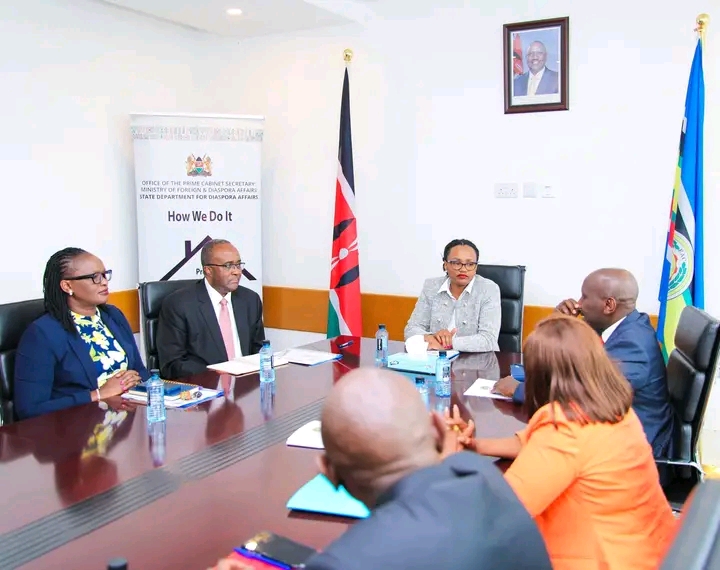
- Teachers undertaking approved in-service programmes could sit examinations and earn certificates or diplomas under proposed legislation.
- The proposed Kenya School of Education would coordinate professional development programmes for teachers and education managers.
- The institution would work with the Teachers Service Commission and other government agencies to develop and assess training.
- The proposed system would make continuous professional development a more structured part of teachers’ careers.
- The reforms are part of a wider education overhaul aimed at aligning teacher preparation with Kenya’s Competency-Based Education framework.
Kenyan teachers could soon have a formal route to earn certificates and diplomas through in-service training. The proposal is contained in the Pre-Service Education and In-Service Training in Basic Education Bill, 2026, which is among education reform measures being considered in Parliament. The proposed system would give teachers an opportunity to undertake structured professional development while already in employment.
Under the proposed framework, people taking approved programmes would sit examinations at the end of their training. Those who successfully complete the required assessments could receive certificates or diplomas depending on the programme. This would give in-service training a more formal academic structure instead of treating professional development only as short courses or routine capacity-building exercises.
The proposed reforms come as Kenya continues to reorganise teacher preparation and professional development around the Competency-Based Education system. Cabinet approved a package of education reform Bills in February 2026, including legislation dealing with pre-service education and in-service training. The reforms are intended to address teacher preparation, professional development and other long-standing gaps in the education system.
At the centre of the proposal is the creation of the Kenya School of Education. The institution would be responsible for developing, evaluating and conducting in-service programmes in partnership with the Teachers Service Commission and other relevant government agencies. It would also work with private organisations and international partners where necessary to deliver professional development programmes.
The School would not only focus on classroom teachers. Its proposed mandate would cover education managers, school leaders and other people involved in the management of basic education institutions. This would create a wider professional development system covering different levels of Kenya’s education administration.
The proposal builds on recommendations that called for a central institution to coordinate continuous professional development for teachers, education officers and institutional leaders. Earlier education reform proposals had identified the establishment of a Kenya School of Teacher and Education Management as part of efforts to coordinate in-service training.
Teachers could sit examinations after completing courses
One of the major changes for teachers would be the introduction of formal examinations linked to in-service programmes. A teacher undertaking an approved course would therefore not simply attend training but could be required to complete an assessment before receiving a qualification. Successful candidates would then become eligible for certificates or diplomas provided under the proposed framework.
The approach could give professional development a clearer qualification pathway. Teachers seeking to strengthen their skills would have an opportunity to pursue structured programmes while continuing to build their careers. It could also provide education managers and school leaders with formal training linked to their responsibilities.
The proposed School would also offer induction programmes for newly appointed members of county education boards, boards of management and parents-teachers associations. Its mandate would include research, consultancy and support for policy development. The institution would further advise the Cabinet Secretary on matters concerning teacher training.
The proposed reforms extend beyond teachers who are already employed. People seeking registration as teachers would have to undertake pre-service education in line with requirements under the Teachers Service Commission Act. Their training would follow programmes and curricula developed with the involvement of the Kenya Institute of Curriculum Development.
Assessment would also become a key part of the proposed pre-service system. Students undertaking teacher education would be assessed under the national education assessment framework. Those who meet the required standards would be eligible for certificates or diplomas based on the programme they complete.
The changes are part of a broader attempt to move Kenya’s education system away from fragmented training arrangements. The Cabinet said the education Bills approved in February were designed to align governance, curriculum, assessment, teacher training and qualifications with the Constitution and the Competency-Based Education and Training framework.
The Kenya School of Education would be managed by a Board whose chairperson would be appointed by the President. The proposed membership would bring together representatives from key government institutions involved in education, finance, legal affairs and intergovernmental relations.
Representatives from the Teachers Service Commission and the Kenya Institute of Curriculum Development would also sit on the Board. In addition, the Cabinet Secretary would appoint three members who are not public officers. The chief executive officer of the School would attend as an ex-officio member without voting rights.
The chairperson and the three appointed members would serve three-year terms. They could be appointed for a second term of three years if their performance meets the required standards. The arrangement is intended to provide continuity while allowing the government to maintain oversight of the institution.
The proposed Board would have responsibility for managing the School’s assets and financial affairs. It would be empowered to operate bank accounts and oversee the institution’s resources. It would also have authority to receive grants, donations and gifts to support the School’s activities.
Another important responsibility would involve determining fees charged for in-service programmes. The Board would do this in consultation with the Cabinet Secretary responsible for education. This would give the institution a role in determining the financial requirements for teachers and other people undertaking professional development.
The Board would also regulate the conduct and discipline of people enrolled in the training programmes. It could therefore have responsibilities extending from financial management and partnerships to the day-to-day administration of learners at the proposed institution.
If enacted, the proposed framework could make continuous professional development a more formal part of a teacher’s career. Instead of professional training being viewed mainly as periodic upgrading, teachers could have access to structured programmes with recognised qualifications. This could also help create clearer development pathways for education managers and school leaders.
The proposal comes as Kenya continues implementing recommendations from the Presidential Working Party on Education Reform. The government has described the wider package of education Bills as an effort to eliminate duplication and improve coordination across the sector. Teacher preparation and professional development are among the areas targeted by the reforms.
However, the proposals are not yet the law. Parliament will have to consider and pass the legislation before the proposed system can take effect. Teachers and other education stakeholders will therefore be watching the legislative process closely as the government seeks to reshape professional training across the sector.