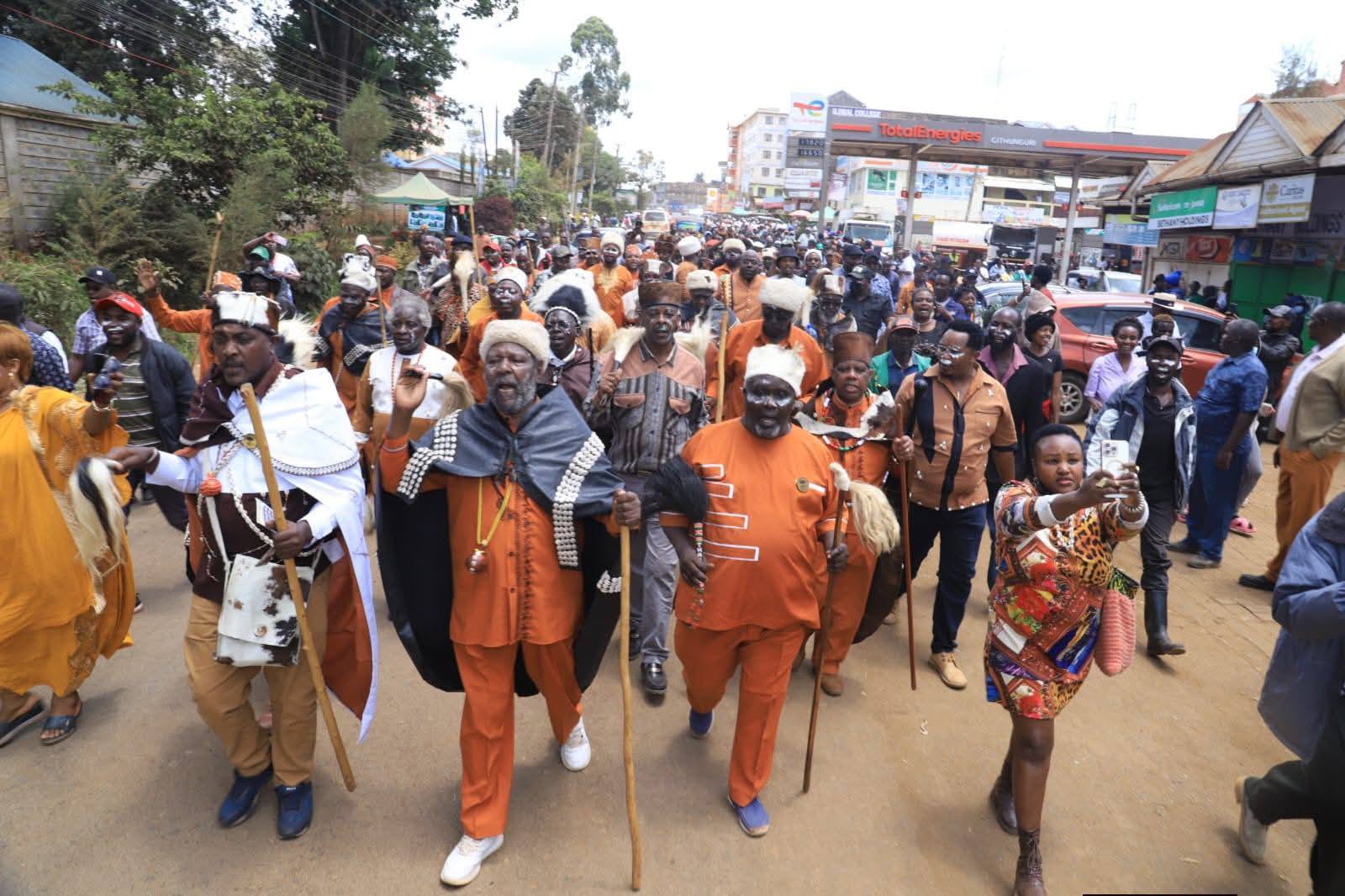
- Elders from Kikuyu Council of Elders conducted a traditional ceremony in Githunguri
- The ritual was performed on land at the centre of a dispute involving development plans
- The 58-acre parcel is said to carry historical links to the Mau Mau struggle
- Security officers were deployed following rising tensions in the area
- Elders insist their actions are cultural, not political, and aimed at protecting heritage
A calm Saturday in Kiambu County turned tense after a group of elders staged a traditional ceremony on disputed land in Githunguri, drawing attention to a long-running conflict over ownership and planned development.
The elders, representing the Kikuyu Council of Elders, gathered at the site to perform rituals they say are meant to safeguard land they consider sacred.
At the centre of the disagreement is a 58-acre piece of land that elders claim carries deep cultural meaning, with roots tracing back to the Mau Mau uprising.
According to them, the land is not just a physical space but part of a larger historical identity tied to ancestral heritage and past struggles.
During the ceremony, prayers and traditional rites were conducted, with strong warnings issued against any attempts to alter or develop the land without community consent.
The standoff has been fuelled by proposed government-backed projects, including plans for affordable housing in the area.
Such initiatives, while aimed at addressing housing shortages, an issue the Government of Kenya has been actively pursuing, have faced pushback from sections of the local community who feel excluded from decision-making.
The elders have strongly opposed these plans, arguing that development should not come at the cost of cultural erasure.
Authorities deployed security personnel to the area as a precaution, following reports of rising tension and previous confrontations linked to the same land.
The presence of officers helped keep the situation under control as residents and supporters gathered around the site, some joining the elders in the symbolic exercise.
Despite the charged atmosphere, the elders maintained that their actions were not politically driven.
They described the ritual as a cultural duty aimed at preserving traditions and protecting land they believe belongs to the community by heritage.
The event has since sparked wider debate across Kiambu and beyond, with questions emerging on how Kenya can balance development needs with respect for cultural and historical sites.