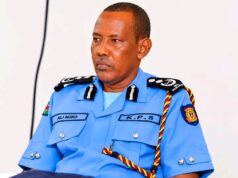
- Deputy Inspector-General Eliud Lagat has directed police commanders to physically account for officers under their jurisdiction.
- The exercise follows concerns raised by Inspector-General Douglas Kanja over foreign recruitment agencies allegedly targeting serving police officers.
- Commanders must submit details of officers who cannot be traced and explain their absence.
- A November 2026 investigation by Journalists for Justice documented 841 Kenyans among 3,034 Africans recruited into the Russian military.
- Parliament was previously told that more than 1,000 Kenyans had travelled to Russia to fight in the war against Ukraine.
The National Police Service has ordered a nationwide physical headcount of its personnel following concerns that foreign recruitment networks could be targeting serving officers for military service abroad.
Deputy Inspector-General of the Kenya Police Service Eliud Lagat issued the directive, instructing commanders to verify the presence of every officer serving under their respective jurisdictions. The exercise is intended to establish the actual number of officers on duty and identify those whose whereabouts cannot be established.
The order follows concerns raised by Inspector-General of Police Douglas Kanja about foreign recruitment agencies allegedly approaching members of the security services for military assignments outside Kenya.
Commanders have been instructed to submit detailed reports on officers who are missing during the verification exercise. The information will help police headquarters establish whether the absences are authorised or require further investigation.
Importantly, the directive does not establish that serving Kenyan police officers have already joined foreign military formations. It is an administrative verification exercise prompted by concerns over recruitment networks targeting security personnel.
The police headquarters communication requires commanders to provide specific personal and employment details for every officer who cannot be physically accounted for.
The information requested includes the officers’ full names, service and payroll numbers, counties of deployment and respective police stations. Commanders must also explain the circumstances surrounding each person’s absence.
The reports should indicate whether an officer is away on authorised leave, sick leave, absent without official leave, serving a suspension or has been convicted. They must also establish the last date each missing officer was physically accounted for.
The requirement places responsibility on local commanders to provide an accurate picture of personnel under their supervision. Any unexplained absence can then be referred to headquarters for appropriate administrative or investigative action.
The headcount comes against the background of investigations exposing networks accused of recruiting Kenyans to fight alongside Russian forces in the ongoing war against Ukraine.
A report by Journalists for Justice titled Death Contracts: How Russia Recruits Africans to Fight and Die in Ukraine documented 841 Kenyans among 3,034 Africans identified as having been recruited into the Russian military.
The investigation, published in November 2026, described Kenya as the largest documented source of African recruits in the research. It identified former and serving National Youth Service personnel, prison officers and people with military backgrounds among those linked to the recruitment networks.
The findings raised concerns about how intermediaries allegedly used employment agencies, personal relationships and institutional connections to reach potential recruits.
The investigation also documented cases in which Kenyans were reportedly promised civilian employment opportunities before being drawn into military service. Some recruits later found themselves deployed to the battlefield in Ukraine.
The latest police directive also follows revelations made in Parliament in February 2026 by National Assembly Majority Leader Kimani Ichung’wah.
While presenting intelligence findings to lawmakers on February 18, Ichung’wah said more than 1,000 Kenyans had been recruited and travelled to Russia to participate in the war against Ukraine.
He told Parliament that recruitment agencies were targeting former military personnel, former police officers and unemployed civilians, particularly people aged between their mid-twenties and 50 years.
According to the intelligence findings, some recruiters promised monthly salaries of approximately KSh350,000, signing bonuses ranging from KSh900,000 to KSh1.2 million and the possibility of obtaining Russian citizenship.
The report also described travel arrangements involving Istanbul in Turkey and Abu Dhabi in the United Arab Emirates. Other recruits allegedly used routes through Uganda, the Democratic Republic of Congo and South Africa to avoid detection at Kenyan airports.
The intelligence briefing gave an account of the situation facing some of the recruits as of February. It listed 39 Kenyans as hospitalised, 28 missing in action and 89 deployed to the frontline, among other categories.
These figures were part of the intelligence findings presented to Parliament and should not be confused with the separate 841 cases documented by Journalists for Justice.
Investigations Raise Questions About Security Personnel
Investigative reports have also examined allegations that recruitment networks were approaching people with previous experience in law enforcement and military operations.
A Citizen TV investigation published in February 2026 exposed an alleged recruitment operation whose intermediaries were seeking individuals with police or military backgrounds. One person presented as a recruiter reportedly said the network was interested in people who had served in security agencies or received basic military training, including through the National Youth Service.
The Washington Post separately reported claims that at least 32 active military personnel had deserted to travel to Russia. However, that figure was attributed to a source in Kenya’s security industry and was not independently verified.
The distinction between former and serving personnel remains important. Evidence that retired or former security officers have been recruited does not automatically prove that serving National Police Service officers have abandoned their duties to enlist in foreign militaries.
Inspector-General Douglas Kanja had previously warned that individuals facilitating the recruitment of Kenyans into foreign military service would face investigations and possible prosecution.
He said the Directorate of Criminal Investigations was pursuing the matter and would establish the roles played by people suspected of involvement.
“The DCI is on that matter, and by the end of the day, we will know who did what, who played which role. Any person who committed a crime in that direction will have his day in court,” Kanja said.
The nationwide headcount now adds another layer to the government’s response by requiring police leadership to establish the whereabouts of every serving officer.
The findings could help identify unexplained absences, strengthen personnel accountability and determine whether any serving officers have been approached or drawn into foreign recruitment arrangements.