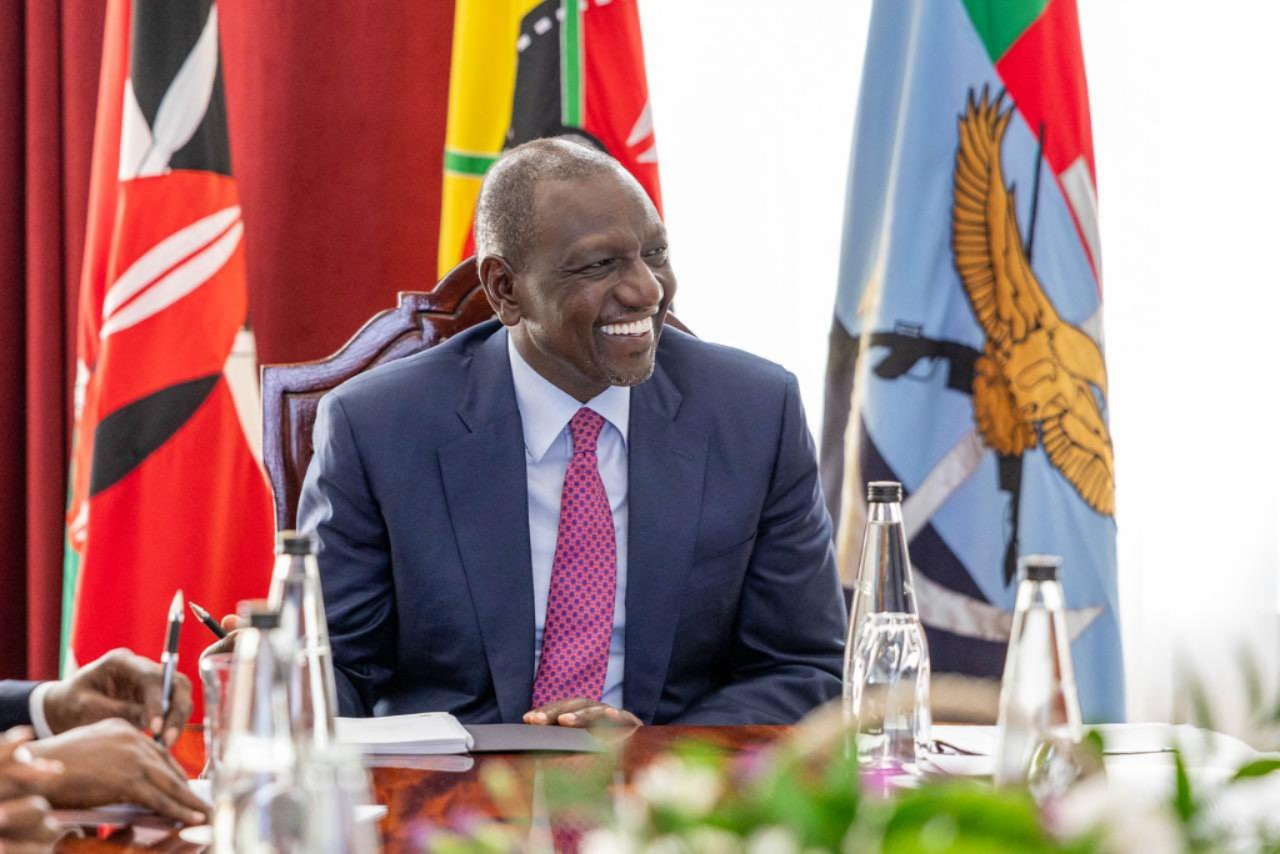
- President William Ruto has signed the Tax Laws (Amendment) Bill, 2026, and the Kenya Revenue Authority (Amendment) Bill, 2026, into law.
- The Tax Laws (Amendment) Act extends the reduced 8% VAT rate on petroleum products for another 90 days.
- The legislation also introduces excise duty changes affecting tiles, sanitary ware and glass products.
- Amendments to the KRA law are intended to strengthen the authority’s governance, financing and operational efficiency.
- The measures seek to provide tax relief while improving revenue administration and supporting economic activity.
President William Ruto has signed two tax-related laws introducing further relief on petroleum products and changes to revenue administration. The signing took place at Eldoret State Lodge in Uasin Gishu County. The legislation covers amendments to existing tax laws and reforms to the Kenya Revenue Authority’s framework.
The Tax Laws (Amendment) Act extends the reduced Value Added Tax rate on petroleum products from 16% to 8% for another 90 days. The extension is intended to help ease pressure on motorists, businesses and households facing higher transport and living expenses.
The measure maintains the lower VAT rate for the additional period, offering temporary relief to consumers. Its impact on pump prices and household spending will depend on how the tax change feeds through the fuel supply chain and other market costs.
The Tax Laws (Amendment) Act also introduces changes to excise duty on tiles, sanitary ware and glass products. The changes are intended to reduce pressure on construction costs and support activity in the housing sector.
Lower costs for affected materials could benefit developers, contractors and households planning construction projects. The reforms are also expected to support employment across parts of the building and construction industry, although the actual impact will depend on how suppliers and businesses respond.
The construction-related measures form part of the wider package accompanying the fuel VAT extension. They seek to support economic activity while adjusting the tax treatment of selected products.
The second law, the Kenya Revenue Authority (Amendment) Act, introduces changes to the authority’s governance and financing arrangements. The reforms are intended to improve its operational efficiency and strengthen its ability to collect revenue.
The changes are presented as administrative reforms rather than the introduction of additional taxes. Their implementation will be important in determining whether the authority can improve its operations while meeting government revenue targets.
Together, the two laws address different parts of the tax system. One provides temporary relief through a lower VAT rate on petroleum products and changes affecting selected construction materials, while the other focuses on the institution responsible for collecting government revenue.
What the New Laws Mean for Kenyans
The 90-day extension means petroleum products will continue to benefit from the reduced 8% VAT rate during the specified period. Consumers may still face changes in fuel prices due to other market factors, so the tax adjustment does not automatically guarantee a particular pump price.
For the construction sector, the excise duty changes could influence the cost of selected materials. The KRA reforms, meanwhile, are intended to strengthen tax administration and revenue collection without adding new taxes under the stated measures.
The effects will become clearer as the laws are implemented. For households and businesses, the key issues will be whether the fuel tax relief helps contain transport costs, whether construction materials become more affordable and whether the revenue authority operates more efficiently.