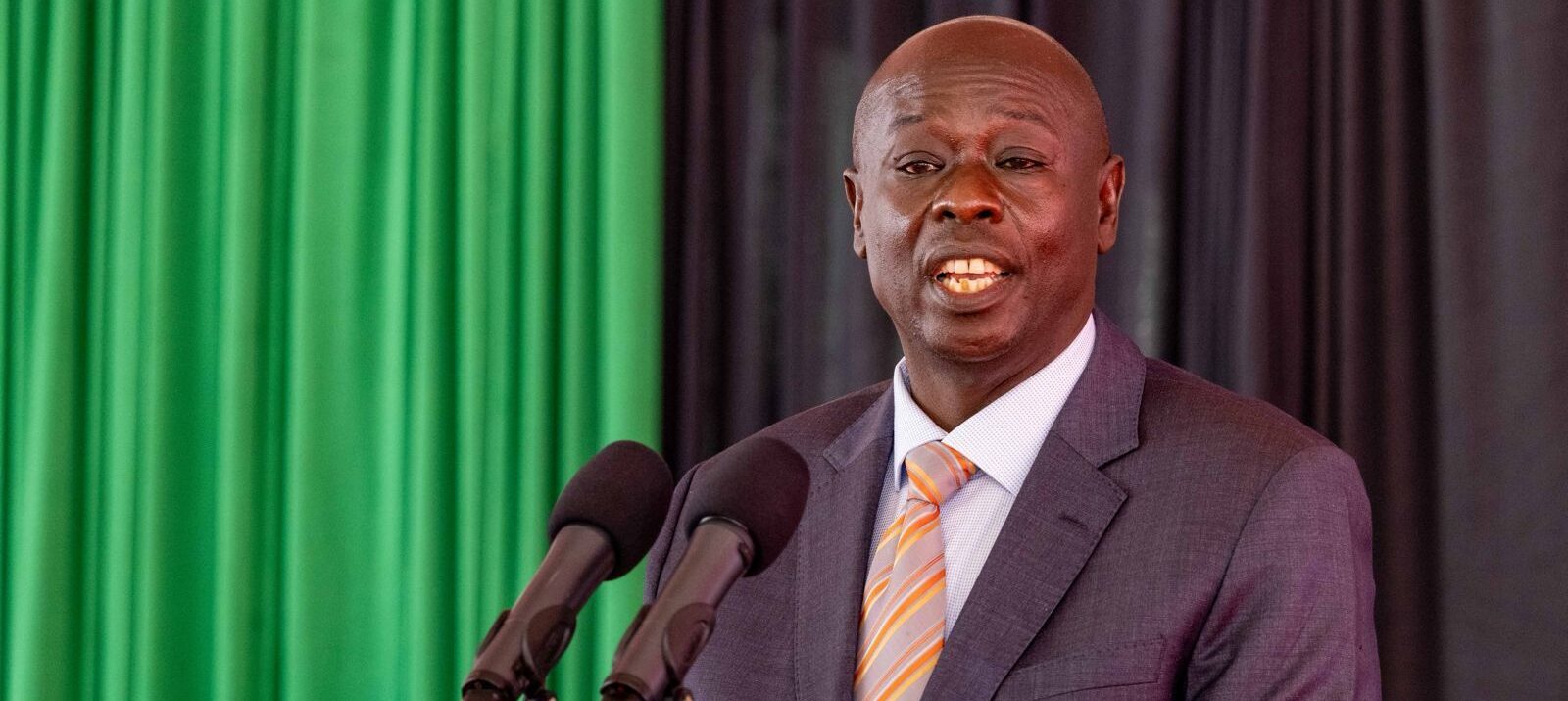
- Rigathi Gachagua has accused Nakuru leaders Susan Kihika and Samuel Arama of being behind an attack on his convoy.
- The former Deputy President says the incident will not stop him from campaigning in Nakuru ahead of the 2027 elections.
- Gachagua has vowed to spend more time in the county as he seeks to strengthen the DCP’s political base.
- He has also accused Arama of working for President William Ruto and criticised Kihika over the incident.
Former Deputy President Rigathi Gachagua has vowed to intensify his political activities in Nakuru despite an attack on his convoy during his visit to the county. The DCP leader spoke on Saturday, a day after vehicles in his convoy were damaged in Kaptembwa. He said the incident would not force him to abandon the county. Instead, he plans to spend even more time there as he builds support ahead of the 2027 General Election.
Gachagua made the remarks while opening a DCP office in Nakuru Town East. He described Nakuru as an important political battleground because of its large number of voters. According to him, the attack has only strengthened his determination to campaign across the county. He said he would “camp” in Nakuru and work to secure votes for his political outfit.
Gachagua directly linked Nakuru Governor Susan Kihika and Naivasha MP Samuel Arama to Friday’s incident. He alleged that Kihika, her husband and Arama organised and financed the attack, claiming they acted on instructions from President William Ruto. These allegations have not been independently established, and the accused leaders have not been presented in the supplied information as having accepted responsibility for the incident.
The former Deputy President also took aim at Arama, whom he described as a political “mole” working for Ruto. He questioned the Naivasha lawmaker’s political associations, particularly his links to Jubilee. The accusations add another layer to the growing political contest in Nakuru as rival camps position themselves for the 2027 polls.
The confrontation happened on Friday in Kaptembwa, within Nakuru Town West Constituency, during Gachagua’s political tour. Vehicles in his convoy were reportedly pelted with stones, with images from the scene showing broken windscreens and windows. Gachagua further alleged that some of the attackers were carrying axes and other crude weapons. He also claimed that police officers witnessed the incident but failed to intervene.
The attack comes at a time when political competition is building across the country ahead of the next General Election. Nakuru is particularly significant because of its sizeable electorate and its position in the Rift Valley. Gachagua is seeking to establish the DCP as a major opposition force, making the county an important area for his political strategy. His decision to return to the county so soon after the incident signals that he does not intend to slow down his campaign.
Rather than calling for a reduction in his political activities, Gachagua used his Saturday appearance to announce an even stronger push into Nakuru. He said the county would remain a key focus of his campaign and vowed to continue engaging residents. His remarks also targeted Kihika, whom he accused of having a role in the incident. He further indicated that he would campaign against her politically ahead of the 2027 election.
Kihika won the Nakuru governorship in 2022 on a UDA ticket. Gachagua now claims he played an important role in helping her secure the position, but says he will work to ensure she loses it in the next election. The governor has previously been a prominent figure in Nakuru politics, and the latest accusations could further sharpen divisions within the county’s political landscape.
The latest confrontation highlights the growing political importance of Nakuru as parties and leaders prepare for the 2027 contest. Gachagua’s DCP has been seeking to expand its presence beyond its traditional political support base. Nakuru, with its large and diverse electorate, is therefore likely to attract increased attention from competing political formations.
Gachagua’s decision to maintain his campaign schedule despite the attack could also put greater focus on security around political events. His allegations against local leaders and government-linked figures are serious, although they remain allegations unless supported by investigations or other independent evidence. The incident is now likely to fuel further political exchanges as the 2027 contest draws closer.
The immediate focus will be on whether authorities investigate the reported attack and establish who was responsible. Gachagua has already made clear that the incident will not change his approach to Nakuru. His promise to increase his presence could see more DCP activities across the county in the coming weeks.
The political fallout is also likely to continue, particularly given Gachagua’s accusations against Kihika and Arama. With the 2027 election approaching, Nakuru is expected to remain a major arena for political mobilisation. For Gachagua, the latest incident appears to have strengthened rather than weakened his determination to fight for support in the county.