- Viral videos show leaders flying in helicopters while residents travel on poor roads
- Clips emerge during President Ruto’s recent development tour in Northern Kenya
- Governors and top officials are seen arriving in luxury transport as locals struggle
- Online debate grows over inequality and slow infrastructure development in the region
- Government insists Northern Kenya remains central to national transformation plans
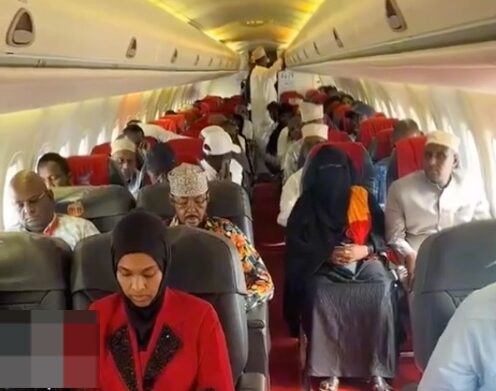
A viral video circulating on social media has stirred heated debate across Kenya after contrasting images showed two very different realities in North Eastern Kenya. In one clip, senior political leaders are seen arriving in helicopters and private aircraft during a presidential tour. In another, ordinary residents are packed in old buses struggling to move through rough, muddy, and damaged roads. The footage has reignited public anger over long-standing development gaps in the region.
The videos, shared widely online, are believed to have been captured during President William Ruto’s recent visit to Northern Kenya. Several senior leaders were part of the delegation, including governors Mohamed Adan Khalif, Ahmed Abdullahi, and Mohamud Mohamed. Cabinet Secretaries Aden Duale and Geoffrey Ruku also joined the tour, arriving in high-end transport as part of the official entourage. The contrast between leadership movement and citizen experience quickly became a talking point nationwide.
While officials moved comfortably from one stop to another, residents in the same region were seen navigating difficult and poorly maintained roads. The videos show buses struggling through muddy sections and broken terrain that slows down travel significantly. For many locals, such conditions are not new but part of everyday life. The situation has once again brought attention to the region’s long-standing infrastructure challenges.
Online reactions quickly picked up the contrast, with many Kenyans expressing frustration over what they see as uneven development. Some users questioned why, despite repeated government visits and funding announcements, basic services like roads and healthcare remain inadequate. Others pointed out that such visits often highlight progress on paper but fail to reflect real conditions on the ground. The discussion has since grown into a broader national conversation on equity.
The renewed debate has also brought back earlier political remarks about accountability in the region. Former Deputy President Rigathi Gachagua had previously stressed the need for proper management of funds allocated to Northern Kenya counties. He maintained that leaders must ensure transparency in how public resources are used. His comments were aimed at addressing long-standing concerns about stalled development.
Gachagua also argued that historical claims of marginalisation should no longer be used as justification for poor progress. He pointed to Kenya’s devolved system, which he said was designed to bring resources closer to the people. According to him, counties now have both funding and authority to implement meaningful change. These remarks are now being revisited as the debate over inequality intensifies.
During the same tour, President William Ruto reaffirmed his government’s commitment to transforming Northern Kenya. He said the region remains central to the country’s broader development plans and will benefit from ongoing projects. The President emphasised that efforts are underway to reduce historical inequalities across all regions. He assured residents that infrastructure and service delivery would improve under his administration.
Ruto further stated that the government is working to ensure balanced development across the country through targeted programmes. He insisted that no region would be left behind in the national transformation agenda. However, the viral footage has sparked questions about how quickly these promises are translating into real change. Many now say visible improvements on the ground will be the true measure of progress.
The incident has once again highlighted the growing perception gap between political leaders and ordinary citizens. While officials continue to highlight development plans and government commitments, residents in affected areas still face daily struggles with infrastructure. The contrast shown in the viral videos has intensified calls for accountability and faster delivery of services. Public pressure is now mounting for more than just political visits and speeches.
As discussions continue online and offline, the focus remains on whether the promised transformation will reach the ground. For many residents, the hope is that future visits will reflect real improvements rather than repeated scenes of inequity