- Police CCTV cameras in Nairobi CBD were not operational when Rex Kanyike Masai was shot on June 20, 2024.
- Senior police officer Andrew Limo told the inquest that the NPS surveillance network was not functioning that evening.
- Investigators also faced challenges obtaining footage and establishing the exact location of the shooting.
- Private CCTV footage recovered from Absa Bank on Mama Ngina Street has emerged as important evidence.
- The inquest is seeking to establish who fired the fatal shot and whether police were involved.
The investigation into the death of 24-year-old Rex Kanyike Masai has encountered another challenge after an inquest was told that police surveillance cameras in Nairobi’s Central Business District were not working when he was shot during the June 2024 anti-Finance Bill protests.
Senior police officer Andrew Limo told the ongoing inquest that the National Police Service CCTV network was not operational on the evening of June 20, 2024. The absence of footage from the police system could make it harder for investigators to reconstruct the events surrounding the shooting. The inquiry is seeking to establish how Masai was shot and identify the person responsible.
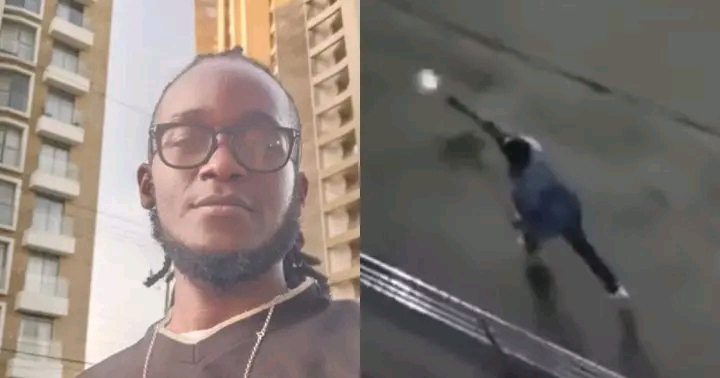
Masai was shot on June 20, 2024, as protesters took to the streets of Nairobi to oppose the Finance Bill. He was taken to Bliss Healthcare Centre after sustaining the gunshot wound but later died from blood loss.
His death became one of the incidents examined amid widespread protests against the proposed legislation. The ongoing inquest is looking into the circumstances of his death and whether the force used during the demonstrations was lawful.
CCTV footage is considered important evidence because it could help investigators establish Masai’s movements, the confrontation surrounding the shooting and what happened immediately before and after he was wounded.
Limo’s evidence indicated that the police CCTV network could not provide footage from the time of the shooting. The inquest had already heard that investigators experienced difficulties obtaining surveillance recordings from several parts of Nairobi’s CBD.
The surveillance system at Jogoo House was also reportedly unavailable because of a faulty fibre connection. The connection was supposed to link the building to other surveillance points and roads within the city.
The lack of functioning police cameras has left investigators relying on other sources of evidence as they try to piece together the events of that evening. It has also complicated efforts to establish the exact movements of those present and determine who fired the fatal shot.
Although the police surveillance network was unavailable, investigators managed to obtain footage from private premises in the city centre.
An Independent Policing Oversight Authority forensic investigator told the inquest in March 2026 that CCTV footage recovered from Absa Bank along Mama Ngina Street was authentic. According to the evidence presented, the recording captured a man firing at protesters during a period between about 7pm and 7:17pm.
The investigator said gunfire was recorded at approximately 7:11pm. The footage could therefore play an important role in helping the inquest establish the sequence of events and determine whether the person who fired the weapon was a police officer or someone else.
The inquiry has also heard that investigators had difficulties identifying the precise location where Masai was shot. Officers interviewed security guards and other witnesses at several points across the CBD as they attempted to establish where the incident occurred.
Among the areas examined were Moi Avenue, Kenyatta Avenue, Parliament Road, City Hall Way, Standard Street and Harambee Avenue. Investigators used information from those locations as they worked to establish Masai’s movements and reconstruct the events surrounding the shooting.
The uncertainty over the exact shooting location has added another layer of difficulty to the investigation. Establishing the location is important because it could help investigators compare witness accounts with available private CCTV footage and other evidence.
The evidence before the inquest is expected to help determine the circumstances that led to Masai’s death. Investigators are particularly interested in identifying the person who fired the fatal shot and establishing whether any police officers were involved.
The inquiry is also examining whether the use of force during the protests was lawful and proportionate. With police CCTV unavailable, private surveillance footage and witness accounts could become increasingly important in resolving the outstanding questions.
The inquest remains ongoing as investigators and witnesses provide further evidence on the circumstances surrounding Masai’s death.