- Swarms of flying ants in Gilgil have sparked a growing illegal trade targeting queen ants.
- Giant African harvester ants are highly valued by collectors and can fetch high prices online.
- Authorities have intercepted thousands of ants being smuggled to Europe and Asia.
- Scientists warn the trade could harm ecosystems both in Kenya and abroad.
- Experts now call for stricter controls and possible legal frameworks to manage the trade.
Every rainy season in Gilgil, thousands of ants take to the air in a natural breeding cycle. What was once just a common sight in this Rift Valley town has now become the centre of an underground trade attracting international buyers.
During this period, winged ants leave their nests to mate, creating a rare opportunity for collectors to capture fertilised queens, the most valuable part of any colony.
The most sought-after species is the giant African harvester ant, scientifically known as Messor cephalotes. These large, red-coloured ants are popular among hobbyists who keep them in transparent enclosures called formicariums to observe how colonies grow and function.
A single queen can start a colony that lasts decades, making it a prized possession for collectors. On the black market, one queen can fetch up to $220 (about KSh 28,000), with most deals happening online.
Former participants in the trade say the business runs quietly but efficiently. Local collectors identify anthills in open fields, especially early in the morning, and gather queen ants during the swarming period.
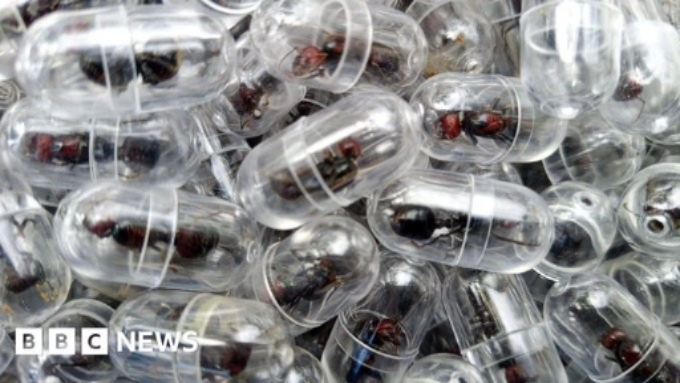
Foreign buyers rarely visit the collection sites. Instead, they wait in nearby towns as middlemen deliver the ants packed in small tubes or syringes. The insects are carefully stored with moist cotton to keep them alive during long journeys.
Because ants are organic material, they can sometimes pass through airport scanners unnoticed, making smuggling easier than with larger wildlife products.
The scale of the operation became clear when about 5,000 live queen ants were discovered in a guest house in Naivasha. The shipment was linked to suspects from Belgium, Vietnam and Kenya, who planned to export them to international markets.
More recently, authorities at Jomo Kenyatta International Airport arrested a suspect with 2,000 queen ants hidden in luggage. The case highlighted how widespread and organised the trade has become.
Those convicted in earlier cases faced charges related to illegal wildlife exploitation and were fined or jailed.
Experts warn that removing queen ants from the wild can destroy entire colonies. Since the queen is responsible for reproduction, her loss means the collapse of the nest and its ecosystem role.
Researchers also caution that exporting these ants could create problems in other countries. If introduced into new environments, they may disrupt agriculture or native species, especially in regions where they do not naturally exist.
Ants play a key role in maintaining healthy ecosystems. They collect and spread seeds, improve soil quality, and support plant growth. In Kenya’s grasslands, their activity helps sustain biodiversity and balance.
Some colonies can survive for over 50 years, with populations growing into hundreds of thousands of worker ants, all dependent on a single queen.
Currently, there are legal ways to collect and export ants in Kenya, but they require permits and agreements to share benefits with local communities. However, authorities say no such applications have been filed so far.
Conservationists are now pushing for stronger international controls under CITES, noting that ants are not yet covered under the treaty.
At the same time, some experts believe Kenya could benefit economically by regulating the trade instead of allowing it to remain illegal. Controlled farming of ants could create jobs and generate income for local communities.
As demand for exotic pets continues to grow, the market for queen ants is unlikely to disappear. The challenge now lies in balancing economic opportunity with environmental protection.
For communities around Gilgil, the flying ant season may no longer be just a natural event; it is quickly becoming part of a global trade with serious consequences.