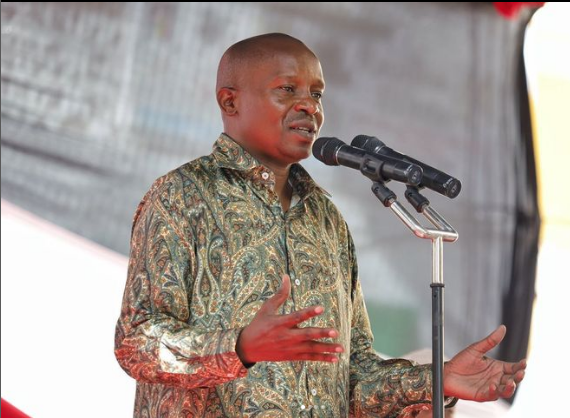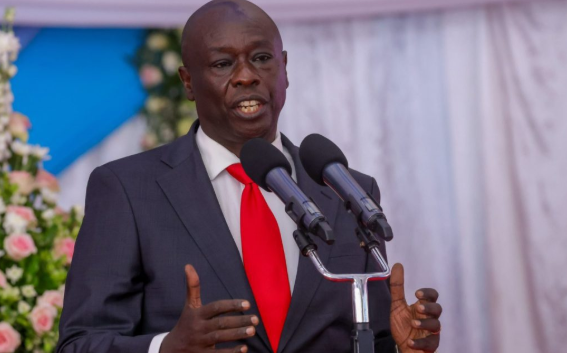
- President Ruto and Rigathi Gachagua clash over who is to blame for the violence during the Saba Saba protests.
- Gachagua accuses Ruto of unleashing ethnic attacks and ordering police brutality.
- Ruto dismisses the claims as “nonsense” and urges those with evidence to go to the police.
- Interior CS Murkomen calls the protests a “coup attempt by anarchists.”
- Gen Z protesters, leaderless but organised online, redefine the face of resistance in Kenya.
Kenya’s political stability is now under threat as President William Ruto and his former Deputy, Rigathi Gachagua, trade increasingly personal and bitter accusations over the violence witnessed during the recent Saba Saba protests.
Ruto angrily rebuffed suggestions that the state orchestrated targeted attacks on businesses owned by members of the Mt. Kenya community, terming such claims as politically motivated.
“If that person is man enough, they should tell us who was involved. Go and write a statement, don’t just speak nonsense.”
President William Ruto
But Gachagua, undeterred, named Ruto directly, accusing him of betrayal.
“You even directed police to shoot innocent Kenyans in the legs. And you couldn’t send condolences to the dead,”
Rigathi Gachagua
This public showdown exposes deep cracks in the ruling Kenya Kwanza coalition and threatens to divide its Mt. Kenya and Rift Valley base ahead of the 2027 election.
Interior CS Kipchumba Murkomen escalated the rhetoric further, labelling the Gen Z-led Saba Saba protests as an attempted coup.
“What we are seeing is a well-coordinated effort by criminal anarchists hiding behind protests.”
The government has been accused of using excessive force, including live bullets and abductions, to suppress demonstrations. At least 31 people were killed and hundreds injured, according to civil rights monitors.
While politicians fight each other, the real shift is being driven by Kenya’s Gen Z young, fearless, digital natives who have no allegiance to traditional political parties.
Mobilising through platforms like TikTok, X (formerly Twitter), and Instagram, they have reframed protests from party-driven events to citizen-led movements demanding transparency, jobs, and justice.
Most are highly educated but underemployed, angry at rising costs of living, poor governance, and a political class they see as self-serving.
“We don’t care about Raila or Ruto. We care about our future,” read one viral tweet during the protest.
According to Afrobarometer, Kenya’s youth have the highest joblessness rates in East Africa, despite being the most educated generation.
As tensions rise, Ruto’s leadership is being tested by both external street pressure and internal political rebellion. His legacy now hinges on whether he chooses dialogue and reform, or repression and denial.
With the 2027 General Election still two years away, the choices made in the coming weeks could reshape Kenya’s democracy, possibly ushering in a new era defined not by politicians but by the youth they once overlooked.
Stay with us for ongoing coverage of Kenya’s shifting political tides and the growing Gen Z revolution.