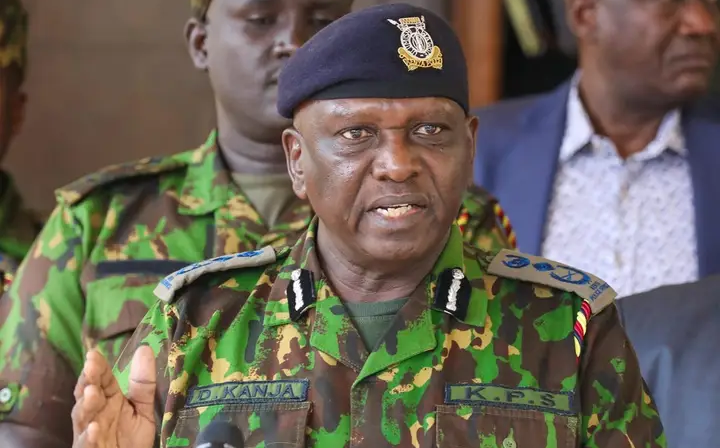
- IG Douglas Kanja said CA gave police information about X accounts tied to online claims against DIG Lagat.
- The posts accused Lagat of corruption and influence over DCI and traffic officers.
- Pixelpioneer account was under investigation, with over 13,000 followers.
- CA submitted account details on the same day DCI made the request.
- Another user, Kelvin Moinde, was arrested and later mentioned Ojwang’ and others.
- Ojwang’ was picked up on June 7 and later died in police custody.
- The case raises questions about police action and digital freedom in Kenya.
Inspector General Douglas Kanja has told the Senate that the Communications Authority of Kenya (CA) helped police trace key X (Twitter) accounts that sparked the arrest of the late Albert Ojwang’. His statement gave a clear picture of how investigators followed digital leads linked to posts that accused a top police boss of misconduct.
He explained that the posts, shared from an account named Pixelpioneer, had painted Deputy Inspector General Eliud Lagat as a corrupt officer who used his position to benefit himself.
Kanja said one of the posts claimed Lagat had carefully placed trusted officers in charge of traffic and criminal investigations, allowing him to control key operations and flow of funds. Another message alleged that Lagat owned a luxurious property in Dubai worth millions, calling him a “mafia police”.
These posts, Kanja said, are what triggered the investigations.
On June 4, DCI reached out to the CA, asking for data linked to the Pixelpioneer account. The response came fast — the same day. The Authority confirmed the account was real, had 13,400 followers, and shared full details as requested by investigators.
The IG said this helped push the probe forward.
More Accounts Under Watch
Apart from Pixelpioneer, police also looked into another X account named Kelvinmwicheles. The user behind it was later identified as Kelvin Moinde. He was traced to Migori, arrested, and taken to Nairobi for questioning.
During interrogation, Moinde mentioned four more people connected to the online posts — among them, Albert Ojwang’, Dorcas Mawia, Douglas Marigiri, and Peter Mbugua.
“Moinde gave his statement and listed others involved, including the late Ojwang’,” IG Kanja told the Senate.
Albert Ojwang’ was arrested on June 7 in Homa Bay. He was then transported to Nairobi, where he arrived at Central Police Station at 9:17 p.m. The next part of his story shocked many — just hours later, he was confirmed dead in police custody.
The situation has drawn public concern, with growing debate on how online voices are being handled by authorities.
Kanja’s statement makes one thing clear — digital platforms now play a big role in police investigations. But this case also raises bigger issues. Is enough being done to protect privacy, due process, and the freedom of online expression in Kenya?
That’s the conversation many Kenyans are now having.