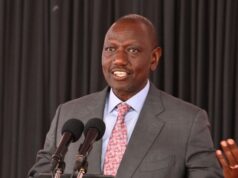
- Gachagua accuses Ruto’s team of using force on schoolgirls
- Butere Girls students tear-gassed after refusing to perform a play
- Drama piece titled “Echoes of War” touches on Gen Z rebellion
- Gachagua compares Ruto’s rule to Kibaki’s leadership
- Education CS defends the gov’t, says students pulled out willingly
Former Deputy President Rigathi Gachagua has come out strongly, blaming the current administration for a violent response to Butere Girls’ students who were involved in a controversial school drama production.
The drama, titled “Echoes of War”, highlighted a youth uprising against a harsh regime—something many felt mirrored Kenya’s political climate. During the National Drama Festival in Nakuru, the students were tear-gassed after choosing not to perform the play.
“Why Use Teargas on Kids?” Gachagua Asks
While speaking at a memorial for the late President Mwai Kibaki, Gachagua expressed deep concern, questioning why the government would unleash such force on innocent learners.
“Even the colonial government spared children,” he said.
“Now the government is paranoid—fighting shadows, including schoolgirls.”
He added that it was shameful to imagine a government so unstable that a school performance could shake it.
“This Gov’t is All About Deals”
Gachagua went further, criticizing the administration for chasing profit and sidelining the people.
“This government is all about business. The President, intelligence, and police are just hunting for deals,” he claimed.
He praised Kibaki’s leadership, saying it was grounded in vision and development—not control and fear. According to Gachagua, proper governance comes when citizens see value in the taxes they pay.
Public Outrage Grows, Ministry Responds
The drama at Butere Girls has triggered an uproar, with many Kenyans asking why authorities were quick to shut down student expression. But Education CS Migos Ogamba defended the decision.
He denied that the students were forced out and blamed the school for going against TSC rules.
“You can’t turn students into political weapons,” Ogamba said.
“Learning institutions must remain neutral.”