- A Tanzanian minister has strongly rejected President William Ruto’s remarks on regional road rankings
- He accused the Kenyan leader of misleading the public by using disputed infrastructure figures
- The remarks followed Ruto’s claim that Kenya leads East Africa in tarmacked roads
- The exchange has triggered debate across Kenya, Tanzania, and the wider EAC region
- Citizens and analysts weigh in as infrastructure becomes a fresh political flashpoint
President William Ruto recently drew attention after stating that Kenya has made major progress in road construction. He said the country now leads the East African region in total kilometres of tarmac roads. The remarks were made during a public address highlighting infrastructure development. His comments were widely shared and discussed across the region. Many supporters in Kenya welcomed the message as proof of progress.
However, the statement did not go down well in neighbouring Tanzania. It quickly became a topic of debate among political leaders and citizens. The comparison between East African Community countries added extra tension to an already sensitive issue. Infrastructure is often used as a measure of development in the region. Because of that, the claim attracted immediate attention beyond Kenya’s borders.
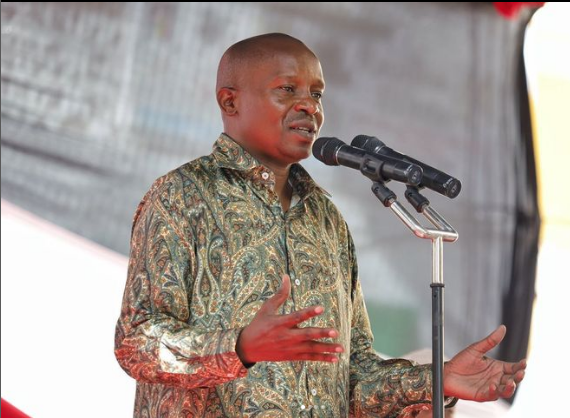
A senior Tanzanian minister responded firmly to the claims made by the Kenyan President. He dismissed the figures as misleading and said they did not reflect reality. Using a strong Swahili phrase, “Takwimu za kutudogosha,” he accused the numbers of being used to downplay Tanzania’s progress. His comments quickly spread across social media platforms in both countries.
The minister went further, directly accusing Ruto of misleading the public. He described the remarks in very harsh terms, calling them dishonest. The statement sparked intense reactions online, especially among users in East Africa. Some Tanzanians supported the minister’s response, saying their country’s development should not be overlooked. Others felt the language used could worsen diplomatic relations.
The disagreement has revived the long-standing friendly rivalry between Kenya and Tanzania. Both countries are key members of the East African Community and share strong trade and cultural ties. However, public comparisons between leaders often spark debate and competition. Infrastructure, especially roads, has become a common measure used in such comparisons.
Over the years, both nations have launched major road projects to boost transport and trade. These developments are often showcased by political leaders as signs of economic progress. When one country appears to claim superiority, the other usually responds with its own achievements. This pattern has repeated itself in different regional discussions. It reflects both cooperation and competition within the bloc.
Ordinary citizens across the region have also joined the conversation. Some Kenyans defended President Ruto, saying the government has invested heavily in road networks. They argued that official data should be trusted in assessing progress. On the other hand, many Tanzanians insisted that their country’s development should be fairly recognised.
Truck drivers and traders who move between the two countries offered a more practical view. They said road conditions have improved in several areas on both sides of the border. However, they still face delays caused by checkpoints and border procedures. For them, smooth transport matters more than political comparisons. Their daily experience shows both progress and ongoing challenges.
Analysts note that the timing of the exchange has added more weight to the discussion. Both Kenya and Tanzania are in periods where leadership performance is under public scrutiny. Infrastructure projects are often highlighted during such political moments. That makes any disagreement more sensitive than usual.
The strong language used by the Tanzanian minister has raised concerns among observers. While it may resonate locally, it risks creating tension between the two governments. The East African Community continues to promote unity and economic integration. However, such public exchanges can test that relationship. Behind the scenes, diplomatic channels are expected to calm the situation.
Despite the heated remarks, Kenya and Tanzania remain closely linked through trade. Billions of shillings in goods move between the two countries every year. Both governments rely on this flow of commerce to support their economies. Officials are therefore unlikely to let political disagreements affect long-term cooperation.
For now, the debate over roads continues to dominate public discussion online. Each side insists on its own version of progress. Yet beyond the political noise, daily life along the border continues as usual. The focus remains on development, movement, and regional stability.