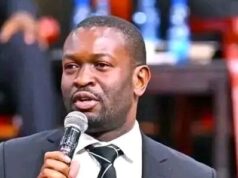
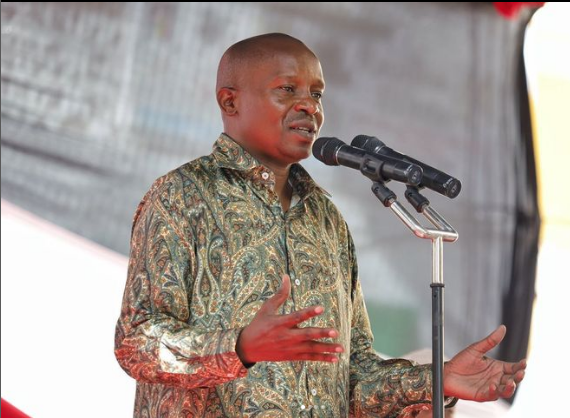
- Siaya Governor James Orengo declares himself the acting leader of ODM during a Nakuru rally
- His statement challenges the recent endorsement of Senator Oburu Oginga for the same role
- Internal divisions deepen as factions disagree on the party’s direction ahead of 2027
- Disputes also emerge over possible cooperation with President William Ruto’s UDA
- ODM faces mounting pressure to unite and define its strategy before the next elections
Political tensions within the Orange Democratic Movement have intensified after Siaya Governor James Orengo publicly declared himself the party’s acting leader. Speaking at a charged rally in Nakuru, Orengo insisted the party requires urgent direction to remain strong ahead of the 2027 elections. His remarks immediately stirred debate within ODM ranks, with leaders and supporters split over the legitimacy of his claim.
Orengo argued that the party cannot afford confusion at the top, especially at a time when political competition is expected to tighten. He pointed to what he described as a leadership gap, suggesting that current arrangements are not strong enough to guide ODM into the next election cycle. His bold declaration now places him at the centre of a growing internal contest.
The governor’s statement directly contradicts the recent endorsement of Siaya Senator Oburu Oginga as party leader. The decision to back Oburu was reached earlier this year during a high-level meeting involving ODM’s parliamentary wing and top party organs. That move had already signalled a shift in influence within the party, which has long been associated with Raila Odinga.
By stepping forward, Orengo has effectively reopened the leadership question, raising fresh uncertainty within ODM. His remarks suggest that consensus may not have been fully achieved despite the earlier endorsement. The situation now presents a clear divide between those backing institutional decisions and those calling for a new direction.
Beyond leadership, deeper disagreements are emerging over ODM’s future political path. Orengo has openly criticised efforts by some party members to work closely with the government led by William Ruto. He warned that aligning too closely with the ruling side risks weakening the party’s identity and betraying its original values.
His position is strongly supported by the Linda Mwananchi faction, which has been mobilising across the country. The group has held rallies in several towns, including Busia, Kitengela, Kakamega, Narok, Mombasa, and now Nakuru. Their message has remained consistent, urging ODM to remain independent and focused on its own political strength.
While Orengo’s camp pushes for a more assertive stance, other ODM leaders are exploring a structured approach to engagement with the United Democratic Alliance. The party’s parliamentary group has already supported talks that could shape future cooperation ahead of the 2027 elections. This includes internal plans to reorganize and prepare for possible coalition negotiations.
At the same time, the party has taken steps to address past grievances, including seeking justice for victims of election-related abuses. Plans are also underway to hold a major National Delegates Convention in March 2027, where key decisions about the party’s future are expected to be made. These parallel strategies highlight the complexity of the current situation.
The ongoing divisions now place ODM at a critical crossroads as the next general election approaches. Competing leadership claims and differing political strategies have created uncertainty about the party’s direction. How the situation is resolved could shape not only internal unity but also its national influence.
For many observers, the coming months will be crucial in determining whether ODM can present a united front. With strong personalities and competing visions in play, the party’s ability to manage internal differences will be tested. The outcome may ultimately define its strength heading into the 2027 race.