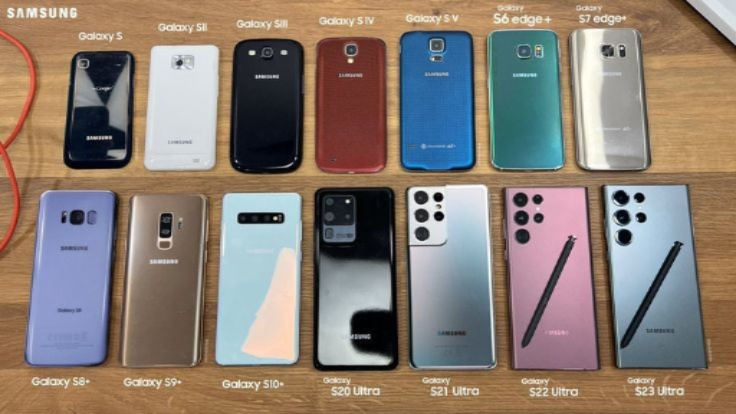
- Samsung Galaxy S was launched in 2010 and marked Samsung’s serious entry into flagship smartphones.
- Over 16 years, the Galaxy S line has evolved from plastic builds to glass, metal, and titanium designs.
- Camera systems grew from 5MP to advanced 200MP AI-powered setups.
- Major shifts included Infinity Displays, flat screens, and stronger materials.
When Samsung Electronics unveiled the first Samsung Galaxy S in 2010, smartphones were still evolving. The device featured a 5MP rear camera, a bright Super AMOLED display, and a smooth plastic body with rounded edges.
At the time, that design felt modern and easy to hold. While the camera now looks basic compared to today’s standards, it signalled Samsung’s serious push into mobile photography.
In the years that followed, Samsung moved quickly.
The Samsung Galaxy S II arrived slimmer with an 8MP camera and Full HD video recording. The Samsung Galaxy S III and Samsung Galaxy S4 introduced larger displays and better autofocus, with camera quality rising to 13MP.
By the time the Samsung Galaxy S5 launched, users could record in 4K and enjoy water resistance. Samsung was improving not just power, but durability and daily usability.
A major shift came with the Samsung Galaxy S6 and Samsung Galaxy S6 Edge. Plastic backs were replaced with glass and metal frames. The curved-edge display stood out, and the 16MP camera introduced optical image stabilisation.
The Samsung Galaxy S7 improved low-light photography with dual-pixel autofocus. At this point, the Galaxy S had firmly positioned itself among the top premium smartphones worldwide.
Design took another leap with the Samsung Galaxy S8. Slim bezels and the Infinity Display changed how phones looked and felt. Samsung continued refining this idea through the Samsung Galaxy S9+ and Samsung Galaxy S10.
Dual cameras, ultra-wide lenses, and hole-punch front cameras expanded photography options. These models combined bold design with practical camera upgrades.
With the Samsung Galaxy S20, camera modules became larger to fit higher-resolution sensors and stronger zoom features. The Samsung Galaxy S21 refined this look with a contour-cut camera that blended into the frame and introduced matte finishes for better grip.
Samsung’s design language began shifting from flashy curves to more structured, durable builds.
From the Samsung Galaxy S22 onward, flat screens returned across most models. The move reduced accidental touches and made screen protectors easier to apply.
The Samsung Galaxy S23 polished the formula further, while the Samsung Galaxy S24 Ultra introduced titanium construction. This material offered stronger protection without adding extra weight.
During this era, Nightography and advanced image processing became central to the Galaxy S experience.
In 2025, Samsung introduced the Samsung Galaxy S25. Instead of dramatic design changes, the focus was on improvement.
The base models became thinner and lighter. The Ultra version added a 50MP ultra-wide lens while keeping the 200MP main camera. AI processing and night photography were enhanced further, reflecting Samsung’s push toward smarter imaging rather than just bigger numbers.
The Galaxy S transformation has followed clear needs: Larger sensors required stronger internal frames. Flat displays improved grip and reduced unwanted screen touches. Materials shifted from plastic to glass, metal, and titanium for better durability. AI became central, improving photos through software as much as hardware.
Each update aimed at solving real user challenges.
In 2010, a 5MP camera was impressive. Today, Galaxy S devices feature 200MP systems supported by artificial intelligence. The journey includes optical image stabilisation, ultra-wide lenses, powerful zoom, and improved low-light results.
Photography is no longer just a feature — it defines the Galaxy S identity.
Sixteen years after its debut, the Galaxy S lineup has matured into more than a stylish smartphone. It is now a productivity tool built around strong materials, intelligent processing, and dependable cameras.
If history is any guide, Samsung Electronics will continue refining its flagship series with purpose. As AI and mobile hardware advance, the next chapter of the Galaxy S story may once again raise the bar for the smartphone industry.