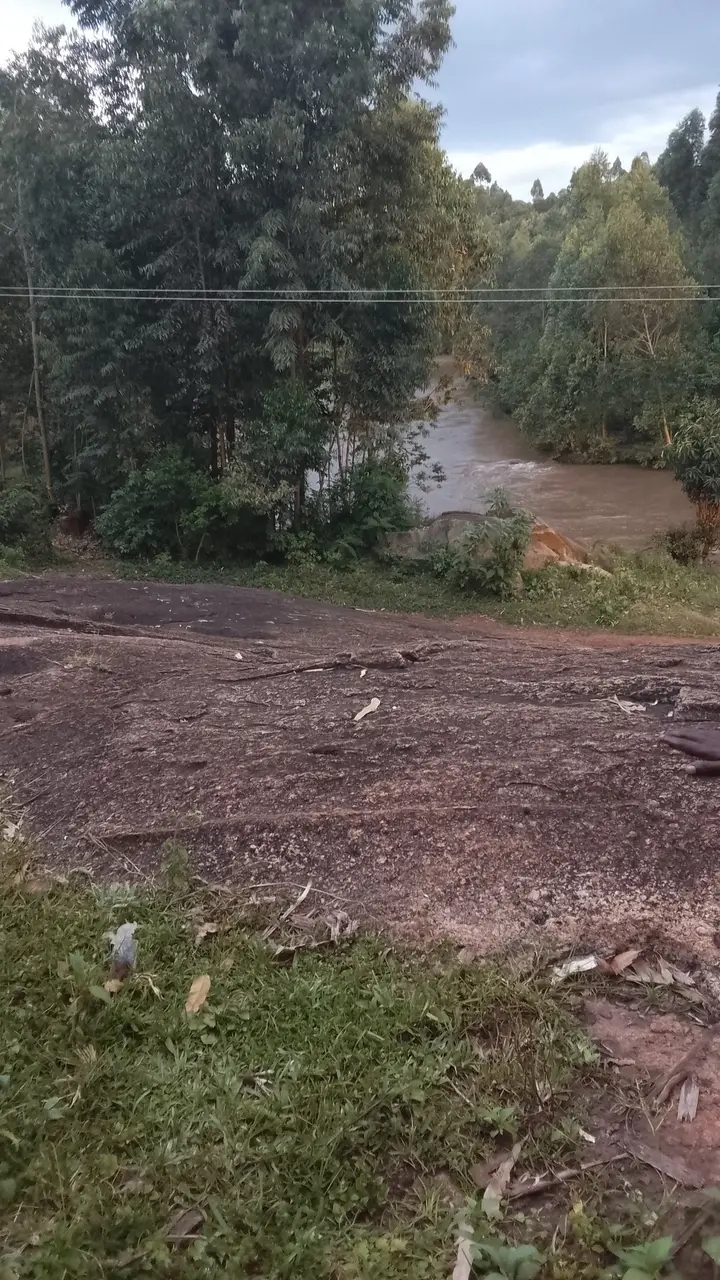
- River Yala starts from Nandi Hills, flows through Siaya, and drains into Lake Victoria.
- Several people have drowned here, and some locals have even committed suicide in the river.
- The river supports livelihoods through fishing, sand and mud harvesting, irrigation, ballast collection, and historical projects.
- Traditional rituals and cultural practices surround deaths, circumcision, and river use by the Tiriki, Maragoli, and Terek communities.
- During rainy seasons, the river can break its banks, creating danger and requiring special caution.
This is River Yala. To many, it is remembered for the dark times during political unrest, when bodies were pulled from its waters. But the river has more stories than just fear and tragedy. Its waters have seen life, death, and generations of tradition that few outsiders understand. And it all begins far away, at its source in Nandi Hills…
From Nandi Hills, the river winds through forests and valleys, cutting across Siaya before finally meeting a lake, and eventually flowing into Lake Victoria. Along the way, it gives life to communities, feeds their crops, and offers fish for the dinner table. Some even drink its waters. But there is more than just sustenance hidden here—if you dare to look closer, you will see the river has a secretive power, one that has shaped lives and stories for centuries.
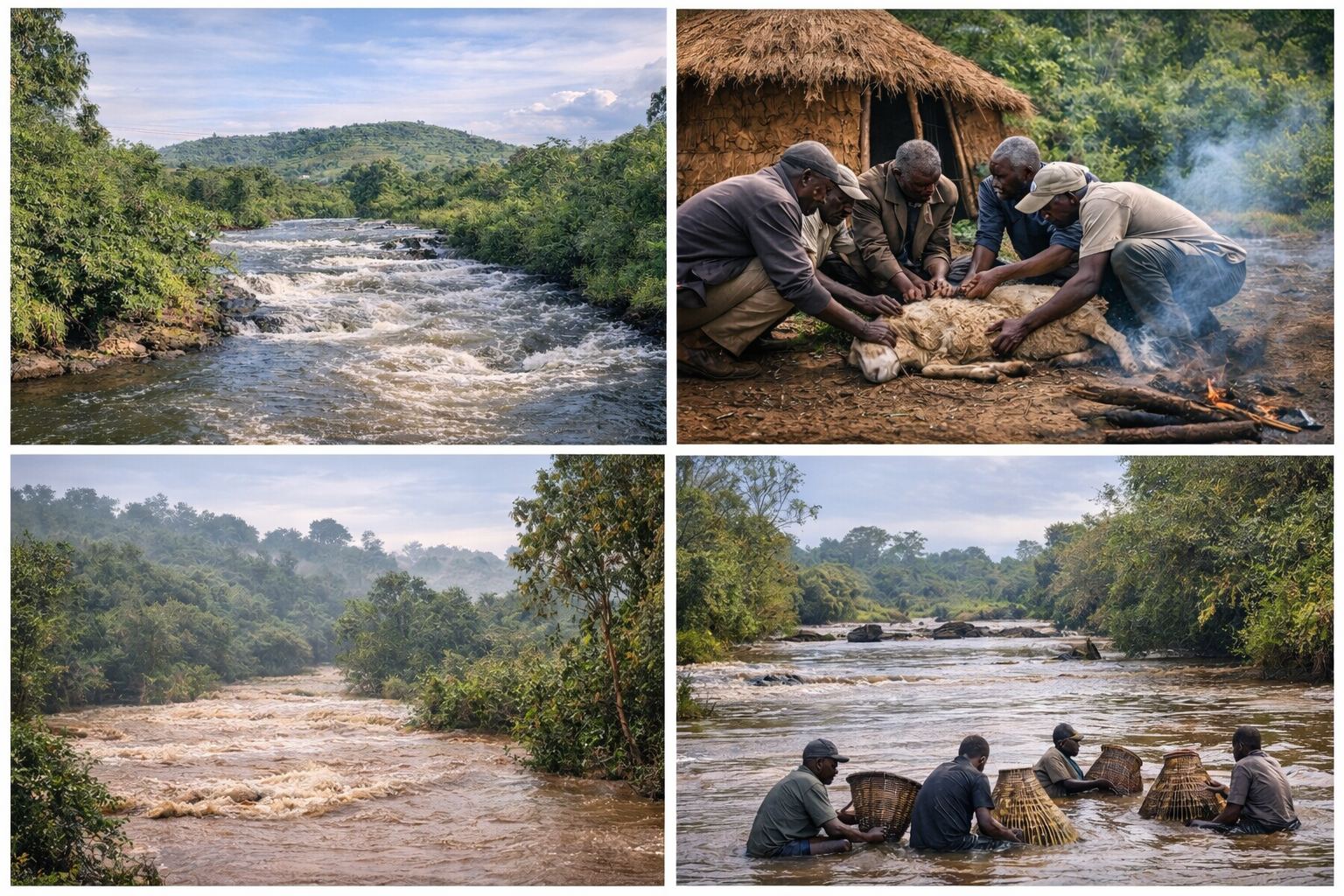
Even during peaceful days, River Yala demands respect. When the rains come, the river can break its banks, sweeping away everything in its path. Locals whisper that during these times, it is a must to “sweep” one or two people, because lives can be lost in an instant. And yet, people still dare to swim here. I remember my cousin holding onto a kibuyu, floating, trying to brave the current. For a moment, it felt like the river could decide his fate with a single wave…
It is not just the water that holds danger. Hippos appear during floods, silently moving in the swelled river. Crocodiles? Not here. But the river is home to mburukenge, creatures that look like crocodiles but are cowardly enough to flee at the first sign of humans. Even so, the river has teeth of its own, hidden beneath calm surfaces, waiting for the unwary.
Life along the river is rich, in ways you might not expect. People fish using ndoani, traditional baskets, and nets left overnight. The river is full of mud fish (inzira), ngege deep in the forested sections, and tilapia — strong fish that can even carry away your ndoani if you are not careful. But fish are only the beginning. The river gives more than food; it gives work, trade, and survival.
During Christmas and festive times, locals harvest mud from the river to build homes, continuing a centuries-old tradition. The mud is famous in Vihiga for the beautiful houses constructed from it. Sand is collected for construction, stones crushed for ballast near Kakamega Forest, and water channels irrigate the crops, sustaining families year-round. And yet, even with all this life, the river has its ghosts…
Stories of the dead walking along the riverbank at night are whispered quietly in the villages. Some say they even hold churches during the dark hours, their voices echoing across the waters. And when someone drowns, a special elder, known as the body retrieval specialist, is called. The police and family compensate him for his work, a reminder that the river is both feared and respected.
Culturally, River Yala touches the lives of three tribes: the Tiriki, who bathe boys here during circumcision; the Maragoli, who perform rituals during their circumcision season; and the Terek of Nandi, who honor customs along its banks. Even the palm trees along the river have their use. Some Tiriki cut the mashindu, palms that naturally grow beside the waters, for special cultural practices.
The river has also powered progress. Long ago, missionaries used its flow to create Poshomill, a place that served people from kilometers away. Hydropower from the river brought light and work to communities before electricity was common in the region. Even today, this legacy stands as a quiet monument to what the river has given — and continues to give.
I remember watching a body float in the river back in 2015. Elders performed cleansing rituals, a sheep was slaughtered, money exchanged hands, and we hid in the maize fields, silently witnessing a tradition that had been done for generations. The river’s currents carried more than water that day; they carried a story, a lesson, a memory that I still cannot shake.
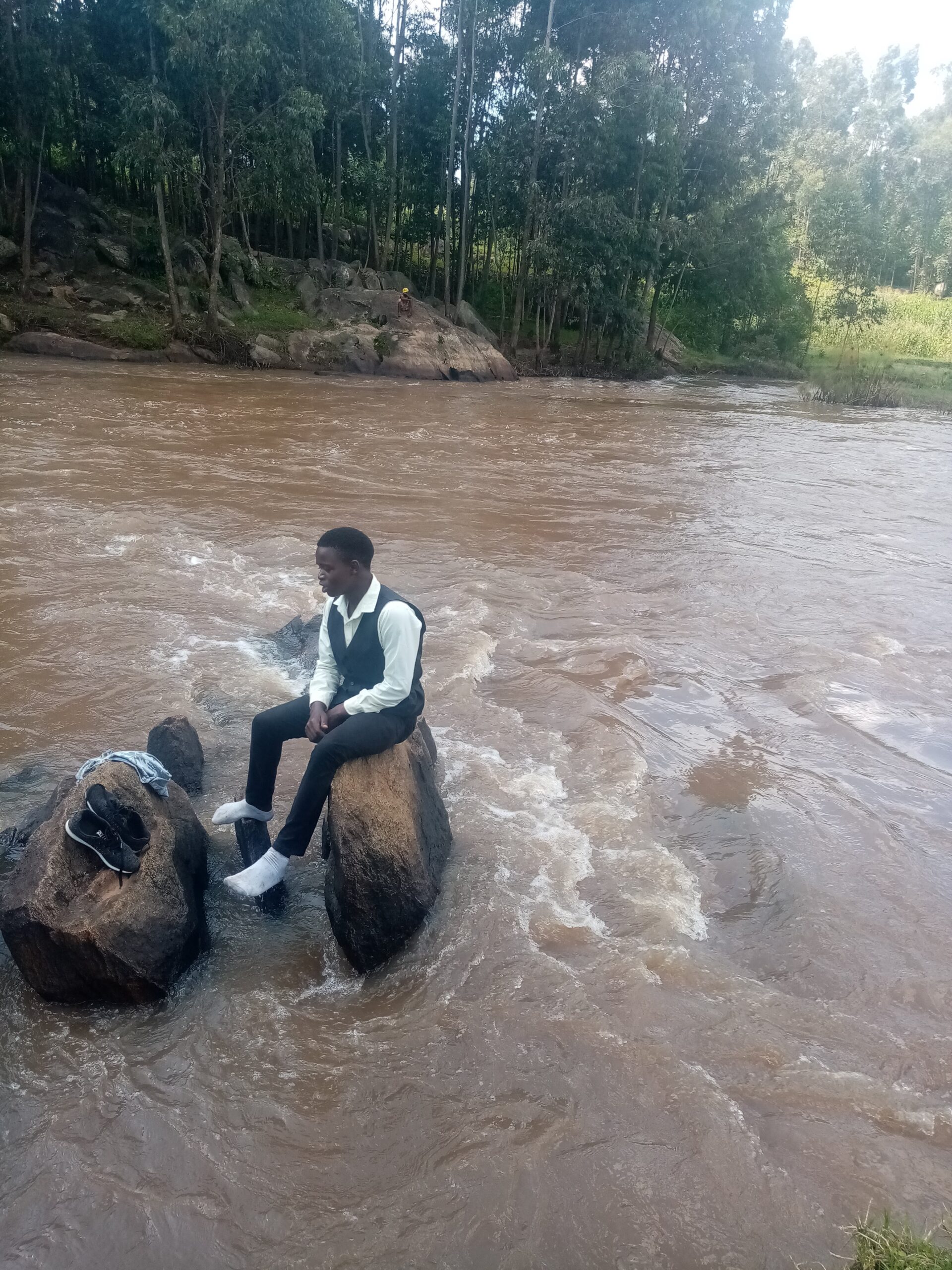
River Yala is beautiful, calm, and green on some days. Children play in its waters, fish jump in playful arcs, and the sun glimmers off its surface. But even in calm, it hides its power, its secrets, and the whispers of its past. The river is alive, and it watches those who dare to approach.
This is only part one of River Yala’s story. The river holds more secrets — from wildlife and hidden rituals to the untold stories of people whose lives have been shaped by its waters. Stay with me, because in part two, we will journey deeper, into the forested stretches, the rainy season floods, and the mysteries that keep River Yala alive in the hearts of locals.