- Kenya becomes the first country to receive direct government-to-government health financing from the US.
- Washington will channel KSh 208 billion into Kenya’s health sector over five years.
- Funds will now go directly to state institutions instead of NGOs.
Kenya has entered a landmark partnership with the United States after signing a Health Cooperation Framework that allows direct government-to-government financing. Officials on both sides say the move marks a major change in how global health support is delivered.
The deal will see the US invest $1.6 billion into Kenya’s health sector over the next five years, with the money flowing straight into public institutions instead of long-established NGO channels.
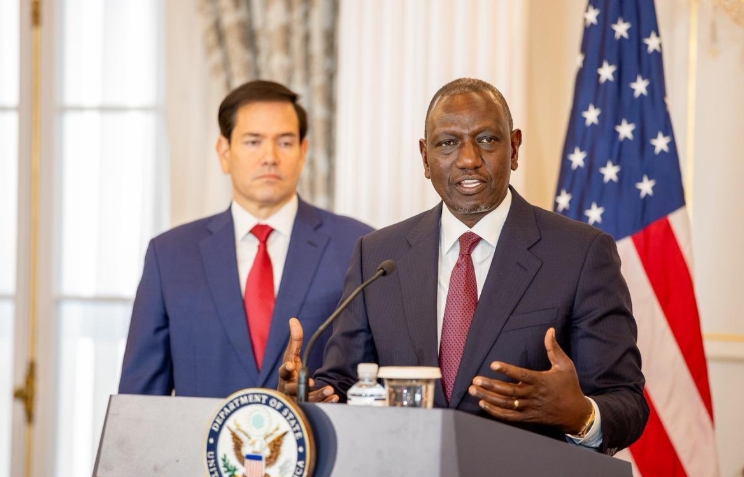
President William Ruto, who witnessed the signing in Washington together with Prime Cabinet Secretary Musalia Mudavadi and US Secretary of State Marco Rubio, said the agreement strengthens Kenya’s universal health coverage agenda.
According to the president, the support will improve hospital equipment, enhance supply chains, boost disease surveillance and expand services under the Social Health Authority.
Ruto said the decision shows confidence in Kenya’s ability to manage its own health funds and promised that “every shilling and dollar” would be used responsibly.
The United States defended the new model, saying direct support is more effective. Secretary of State Marco Rubio said Kenya had been selected because of its strong public institutions. He argued that old donor systems sent too much money into NGO administration instead of national systems.
Rubio also recognised Kenya’s leadership in the Haiti security mission and urged other countries to increase support, saying Kenya “cannot do it alone.”
The shift comes at a time when cuts to traditional USAID funding are already being felt in community health services. HIV programmes that depended on donor-supported supply chains and outreach are now reporting shortages, reduced prevention services and delays in essential drugs.
Health workers warn that patient numbers are rising even as resources shrink, creating fear that progress made in the fight against HIV over the last 20 years could be reversed.
The timing is sensitive for the government, which is promoting universal health coverage reforms while also facing financial gaps created by reduced donor funding. Clinics are relying on short-term fixes, and the national system is being pushed to cover shortages it was not prepared for.
Despite the challenges, both governments say the new partnership will strengthen long-term health systems and reduce over-reliance on external intermediaries.