- The African Union has rejected any recognition of Somaliland as an independent state, insisting it remains part of Somalia.
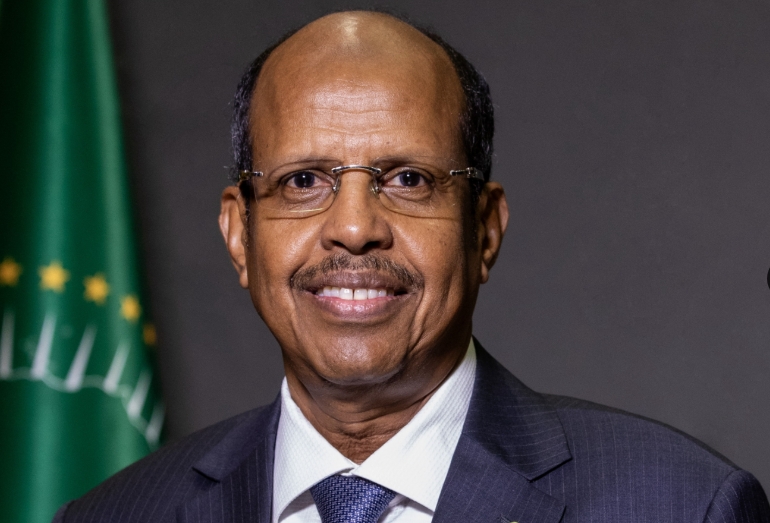
- AU Commission Chairperson Mahmoud Ali Youssouf warned that altering Somalia’s borders violates core AU principles.
- Israel became the first country to formally recognise Somaliland, triggering regional backlash.
- Somalia and several regional states condemned the move, calling it an attack on Somalia’s sovereignty.
The African Union (AU) has firmly dismissed any move to recognise Somaliland as an independent state, warning that such actions threaten Africa’s unity and could destabilise the continent.
In a statement released from Addis Ababa on Friday, December 26, AU Commission Chairperson Mahmoud Ali Youssouf said the organisation was alarmed by recent developments surrounding Somaliland, noting that altering Somalia’s territorial status would go against core African Union principles.
Youssouf reiterated that the AU’s position is guided by the Constitutive Act of the African Union, which upholds respect for borders inherited at independence, a principle first adopted in 1964 by the former Organisation of African Unity (OAU).
“The Chairperson of the Commission firmly rejects any initiative or action aimed at recognising Somaliland as an independent entity,” the statement read, stressing that Somaliland remains part of Somalia.
The AU’s reaction comes a day after Israel became the first country to officially recognise Somaliland as an independent nation, a move that has triggered sharp debate across the region and beyond.
The continental body warned that undermining Somalia’s unity and sovereignty would violate AU values and could set a risky precedent with serious consequences for peace and stability across Africa.
The AU also reaffirmed its support for Somalia’s federal authorities as they continue efforts to rebuild the country, strengthen institutions and promote inclusive governance after decades of conflict and political instability.
Somaliland declared independence from Somalia in 1991, but the move has never been recognised by the African Union or the United Nations. The AU has consistently opposed unilateral secession while supporting Somali-led peace and state-building processes.
Israeli Prime Minister Benjamin Netanyahu said Israel plans to immediately expand cooperation with Somaliland in areas such as agriculture, health and technology.
Somaliland President Abdirahman Mohamed Abdullahi described Israel’s recognition as “a historic moment,” saying it could open doors to global partnerships and economic opportunities.
Abdullahi also announced that Somaliland would join the Abraham Accords, describing the move as a step toward regional and international peace. He added that Somaliland was committed to strengthening partnerships, boosting shared prosperity and promoting stability across Africa and the Middle East.
Somalia’s Prime Minister Hamza Abdi Barre strongly condemned Israel’s decision, saying the country “categorically and unequivocally rejects” what he termed a deliberate violation of Somalia’s sovereignty.
Foreign ministers from Somalia, Egypt, Turkey and Djibouti also issued a joint statement expressing their “total rejection” of Israel’s announcement.
Israeli Foreign Minister Gideon Saar confirmed that Israel and Somaliland had agreed to establish full diplomatic relations, including the exchange of ambassadors and the opening of embassies.