- Kenyan Polytechnic has launched a Russian language programme in partnership with the Russkiy Mir Foundation.
- The project includes free classes, cultural exchanges, and future scholarships for top students.
- Leaders say the programme will open job pathways in energy, mining, technology, and tourism.
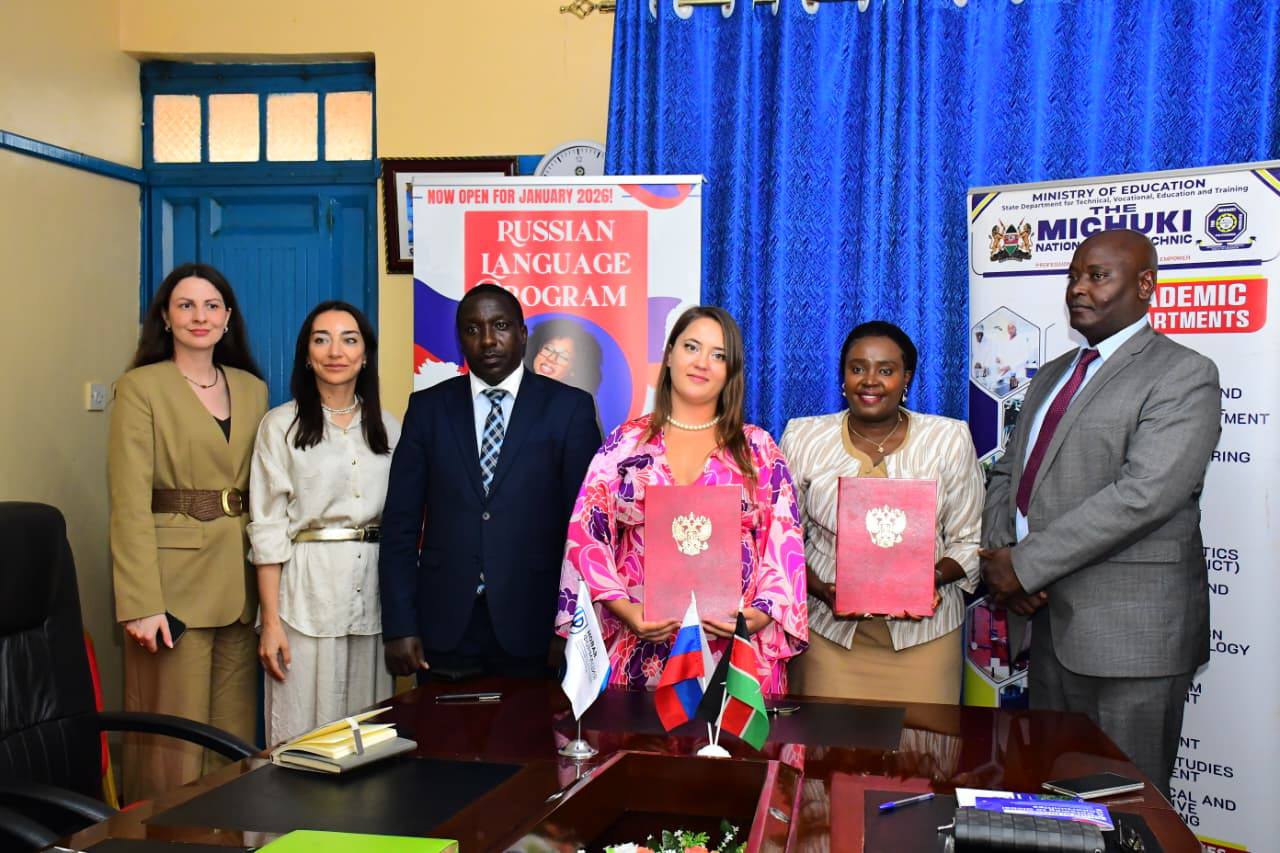
Michuki Technical Training Institute has introduced a new Russian language programme in a major partnership with the Russkiy Mir Foundation. The launch took place in Kiambu County during a colourful ceremony attended by diplomats, tutors, and students who were eager to begin learning a new global language.
Principal Jane Mugwe officially opened the new language lab, which features smart boards and modern headsets donated by the foundation. Mugwe said the new programme will empower young people with skills that align with Kenya’s growing international partnerships.
“This Michuki Polytechnic Russian language programme opens doors our youth never imagined,” she said.
The institution says the programme is linked to real job opportunities in sectors where Kenya and Russia already collaborate. These include nuclear technology, oil exploration, mining, ICT, and security. According to Mugwe, learning Russian is not just an academic activity but a step toward economic advancement.
The first group of 150 students, drawn from different courses such as engineering, hospitality, and business, begins classes next week. Their lessons will mix grammar exercises with cultural exposure, giving them a full introduction to Russian customs and communication.
The Russkiy Mir Foundation was represented by director Elena Petrova, who travelled from Moscow for the event. She presented a symbolic gift to the institute and praised the partnership as an important connection between Kenya and Russia.
Petrova announced that top-performing students will qualify for scholarships to Moscow State University. She also mentioned internship opportunities linked to Rosatom projects in the region.
“Kenya’s youth are vibrant and hungry for knowledge. Teaching them Russian here plants seeds for lifelong friendships,” Petrova said through a translator.
Many of the students see the programme as a chance to secure better job prospects. Kevin Mwangi, a mechanical engineering student, said he hopes to work with Russian companies involved in major projects in Kenya. Tourism student Mercy Wambui also believes learning Russian will help her guide visitors from Eastern Europe.
The programme comes at a time when trade between Kenya and Russia is increasing. Partnerships in wheat, fertiliser, mineral exploration, and technology continue to expand, creating interest in skills that support these sectors.
Thika MP Alice Ng’ang’a attended the event as a guest of honour. She promised bursaries for top achievers and encouraged students to embrace global languages.
“In a global village, monolingual youth get left behind,” she said.
Principal Mugwe added that the programme is about widening opportunities rather than taking political sides. She noted that the institution already teaches other foreign languages such as Chinese and German.
As the launch came to an end, students explored the new language lab, practising simple phrases and adjusting their headphones. With the programme already attracting more applicants than expected, the institute says the demand shows how strongly young people want competitive skills.
The Russian language programme marks a forward-looking step for Michuki Polytechnic, positioning students for careers in emerging international industries and strengthening Kenya’s global connections.