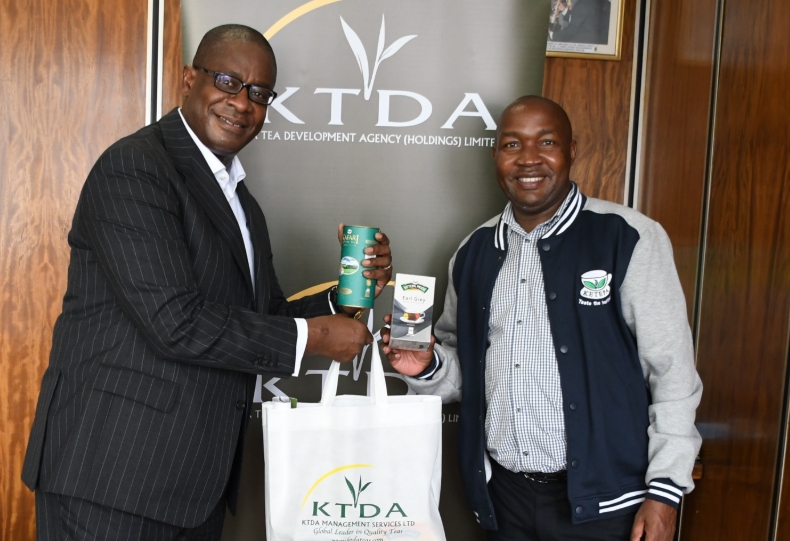
- Farmers accuse KTDA’s Group Finance Director Simeon Rugutt of unexplained wealth.
- His Sh1.1B Syokimau mansion has become a symbol of betrayal for struggling tea farmers.
- Allegations include bribes, nepotism, and deliberate payment delays to suppliers.
- Calls grow for a forensic lifestyle audit into his rapid rise to billionaire status.
- Experts warn KTDA faces state capture if reforms are not enforced.
Kenya’s tea sector, long celebrated as the backbone of the economy, is now mired in scandal. At the heart of the storm is Simeon Rugutt, the Group Finance Director of the Kenya Tea Development Agency (KTDA), accused of amassing vast wealth while farmers continue to struggle with delayed payments and shrinking bonuses.
Rugutt is said to reside in a Sh1.1 billion palatial mansion in Syokimau, a property that many farmers describe as a “monument of betrayal.”
“Every stone in that mansion carries the sweat of farmers,” one Murang’a farmer lamented.
Whispers within KTDA point to a system allegedly built to benefit Rugutt. Payments to suppliers were said to be deliberately delayed unless “facilitation fees” were offered.
Those who refused faced endless delays, while those who complied had their payments cleared quickly. Farmers bore the ultimate cost of this system, with delayed earnings cutting deep into their livelihoods.
Critics also allege that Rugutt built a web of loyalists by placing relatives and allies in finance departments across KTDA subsidiaries. This gave him influence over payments, contracts, and approvals, ensuring his power remained unchallenged.
Governance experts describe the scheme as cartel-like, where farmers’ sacrifices became the source of private enrichment.
Observers argue that no legitimate corporate salary could explain Rugutt’s sudden leap into billionaire status. His rise, they say, is a clear case of “state capture” within the tea industry.
“This is a textbook example of how unchecked power destroys entire sectors,” an economist noted.
Civil society groups, activists, and farmers’ unions are now pushing for a forensic lifestyle audit into Rugutt’s finances. They insist that the source of his empire must be laid bare to protect the integrity of Kenya’s tea sector.
Unless accountability is enforced, critics warn, KTDA risks losing credibility, and Kenya’s tea industry will remain a paradoxical green gold for the powerful few, but green grief for millions of struggling farmers.