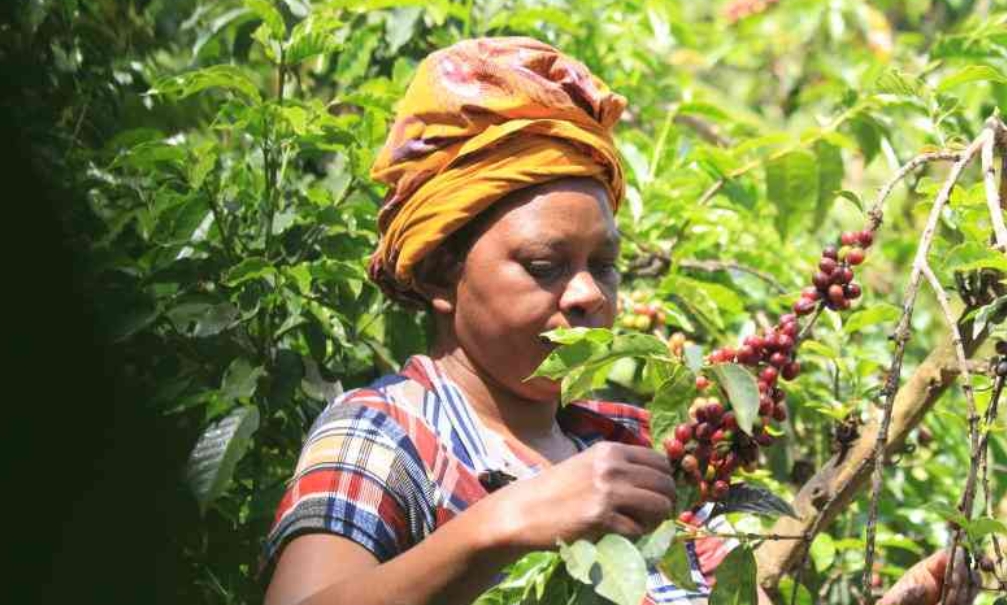
- Farmers in Kirinyaga, Murang’a, and other coffee-growing areas reject the direct-payment plan.
- They say cooperatives are “lifelines,” offering credit, inputs, and record-keeping.
- National Coffee Cooperative Union wants the rollout delayed until June 2026.
- Nairobi Coffee Exchange has suspended the transition after mounting pressure.
- Mt. Kenya MPs warn government against imposing reforms without consensus.
Coffee farmers in Kenya’s main producing counties are threatening to boycott the government’s proposed Direct Settlement System (DSS), arguing it could destabilise cooperative societies and disrupt livelihoods.
The DSS seeks to pay farmers directly into individual mobile accounts such as M-Pesa, bypassing cooperative societies. However, in recent AGMs, farmers stated that they prefer payments to continue through cooperatives, which they described as essential to their survival.
“The system is not just about money transfers. Cooperatives support us in every step of production. Bypassing them weakens farmers and exposes us to exploitation,” a Murang’a farmer leader told local media.
For decades, cooperatives have played a central role in Kenya’s coffee sector by providing farmers with credit and farm inputs. Managing debt collection and record-keeping. Organising processing, marketing, and logistics.
Farmer representatives warn that stripping away these functions would weaken smallholders and leave them vulnerable to middlemen and predatory lenders.
The National Coffee Cooperative Union (NCCU) has asked the government to delay the DSS rollout by at least a year, until June 2026. They argue that more time is needed to: Update membership records. Train farmers in financial literacy. Expand banking and mobile infrastructure in rural areas.
On July 10, the Nairobi Coffee Exchange (NCE) suspended the DSS rollout. For now, the Cooperative Bank will continue to process payments under the existing system.
The pause followed pressure from farmers and lawmakers, particularly MPs from the Mt. Kenya region, who warned that bulldozing reforms without consensus risked chaos and resistance.
Coffee remains one of Kenya’s most important cash crops, with millions of smallholders relying on it. The DSS was intended to improve transparency and reduce losses from corruption in cooperative societies. But critics argue reforms must be gradual and farmer-led, not imposed from above.
The showdown over DSS has now set up a test of wills between government technocrats pushing digital reforms and grassroots farmers defending long-standing cooperative structures.