- President Ruto says free basic education is here to stay.
- 76,000 teachers hired in two years, with 24,000 more planned.
- KSh 1B set aside for new classrooms in Nairobi.
- Treasury CS Mbadi had earlier questioned the sustainability of free education.
- Mbadi suggested parents may have to contribute in future.
- President highlights university funding reforms and CBA salary deal for teachers.
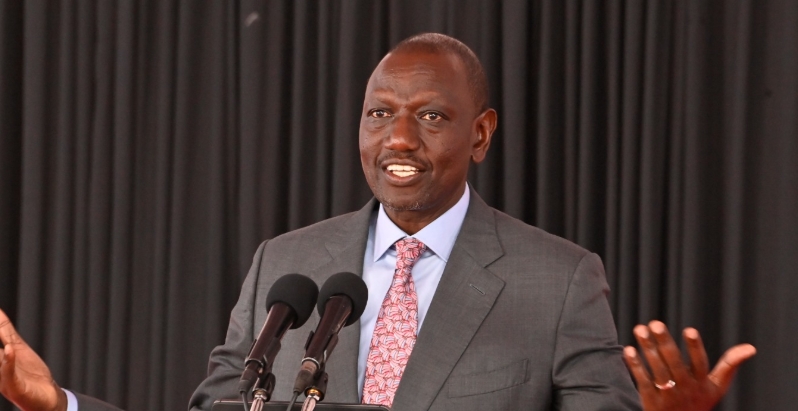
President William Ruto has spoken strongly in support of free basic education, stating clearly that his administration has no plans to scrap it. His remarks came in response to a recent statement by Treasury Cabinet Secretary John Mbadi that sparked confusion and concern across the country.
“Free Primary Education is not going anywhere,” Ruto told the public on Sunday.
Ruto’s comments were seen as a direct response to CS Mbadi’s earlier warning to Parliament that Kenya might no longer afford free education. Mbadi had said the government’s budget was stretched and hinted that parents could soon start paying part of the school fees.
But Ruto pushed back on those claims, insisting that education is a top priority and cannot be negotiated.
The President outlined some of his achievements in the education sector. He noted that over the past two years, his government has hired 76,000 teachers, with plans to bring in 24,000 more next year.
He also mentioned the building of 23,000 classrooms countrywide and announced that Nairobi alone will get KSh 1 billion for new classrooms.
Ruto also highlighted changes to the university funding system, saying the new model is aimed at making university education more accessible and of higher quality.
In addition, he shared good news for teachers, saying they will benefit from a Collective Bargaining Agreement (CBA) that runs until 2029, including salary increases ranging from 6% to 29%.
Earlier, CS Mbadi had told lawmakers that the government could no longer fully cover the KSh 22,000 per student capitation in secondary schools. Despite this, he noted the Treasury had already disbursed the full amount as per the current budget.
He blamed MPs for budget cuts and challenged them to use CDF bursaries to bridge the KSh 5,000 gap per learner, a suggestion that may face strong political pushback.
“They ask why I haven’t released KSh 22,000 per child, yet they are the ones who reduced the budget,” Mbadi said.
While CS Mbadi’s remarks opened a heated conversation about the future of education funding, President Ruto has stood firm. He has assured Kenyans that free basic education is not under threat, and that his government remains fully committed to making learning accessible to all children.