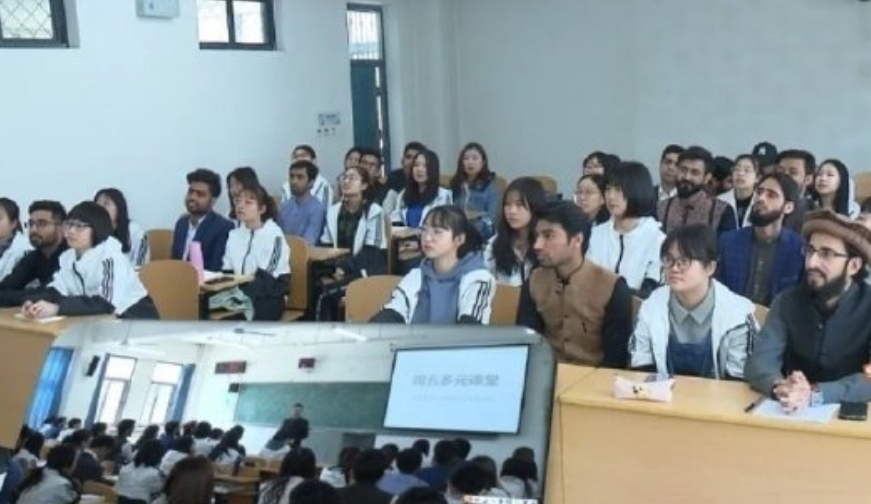
- Dalian Polytechnic University expelled a female student over “inappropriate interaction” with a foreign man.
- The institution claimed her behaviour damaged “national dignity” but gave no clear details.
- Her public naming triggered anger and was seen as invasive and discriminatory.
- Social media erupted with debates on privacy, women’s rights, and double standards.
A storm of controversy is brewing in China after Dalian Polytechnic University, based in the northeast, expelled a female student for allegedly having “improper interactions” with a foreign man. The school said her behaviour went against the institution’s values and harmed the nation’s image.
Despite announcing the expulsion publicly, the university failed to provide details about the incident. However, what shocked many was the decision to disclose the student’s name, which quickly spread across social media.
Platforms like Douyin and Xiaohongshu were flooded with angry reactions, as thousands of users questioned why a personal relationship could result in such severe punishment. Critics argued that the move reflects deep-rooted misogyny and a troubling form of nationalistic control over women’s bodies.
Many wondered if a male student would face the same consequences or even receive praise for similar behaviour.
Speculation linked the incident to Ukrainian gamer Danylo Teslenko, also known as “Zeus,” who had earlier posted videos showing moments with an Asian woman in a Shanghai hotel. While her identity wasn’t confirmed, many suspected she was the expelled student.
Zeus addressed the situation by clarifying that there was nothing explicit in the videos and that he never disrespected Chinese women. He removed the clips after backlash, but emphasised it was simply a personal moment shared online.
State-run media outlet The Paper strongly criticised the university for publicly naming the student, calling it a possible legal breach and stating that private affairs should not be turned into public scandals. Legal experts also questioned whether the university had the authority to control a student’s personal life in such a harsh and public manner.
This case has now evolved into a wider discussion about women’s rights in China and how national pride is sometimes used to limit personal freedom. Many online users are drawing comparisons to extreme policies seen in other parts of the world, warning that such acts undermine progress and equality.
The university has so far not issued any further statement.