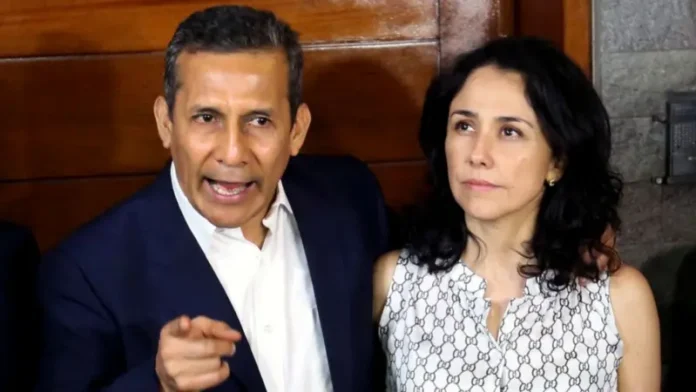
- Former Peruvian president Ollanta Humala has been handed a 15-year prison sentence for money laundering.
- The court found that Humala and his wife Nadine Heredia accepted illegal campaign funds from Brazil’s Odebrecht.
- Heredia, who also received a 15-year sentence, will relocate to Brazil after being granted asylum.
- Both denied any wrongdoing throughout the three-year trial, despite prosecutors pushing for longer jail terms.
- Their conviction is one of the biggest political corruption rulings in Peru’s history.
A Peruvian court has convicted former president Ollanta Humala of money laundering, sentencing him to 15 years behind bars. The ruling also targeted his wife, Nadine Heredia, who was found guilty of jointly accepting illicit funds from Odebrecht, the scandal-ridden Brazilian construction firm.
The funds in question allegedly bankrolled Humala’s presidential bids in 2006 and 2011, tipping the scales in what are now viewed as deeply compromised elections.
Heredia Also Sentenced, Granted Safe Passage to Brazil
Nadine Heredia—co-founder of the Nationalist Party and a key player in Humala’s political rise—was slapped with the same 15-year jail term. However, unlike her husband, she won’t be serving her time in Peru. Heredia has been granted asylum by Brazil, and Peru’s foreign ministry confirmed she and her son will be safely escorted out of the country.
Despite the verdict, Heredia appeared at the sentencing via a virtual court link, while Humala was present in person.
Prosecutors Wanted Tougher Sentences
Throughout the trial, both Humala and Heredia consistently denied the allegations, claiming innocence. Prosecutors had originally pushed for 20 years for Humala and more than 26 years for Heredia, citing the scale of the illegal donations and the long-term damage to Peru’s democratic processes.
The trial, which lasted nearly three years, is one of the most high-profile legal showdowns stemming from the Odebrecht corruption network, which has snared politicians across Latin America.
From Military Rebel to Convicted Leader
Humala’s conviction marks a dramatic downfall for the former army officer who once staged a failed uprising against President Alberto Fujimori in 2000. His political journey took many turns—initially aligning with Venezuela’s Hugo Chávez in 2006 before shifting to a more centrist stance in 2011, modeled after Brazil’s Lula da Silva.
Though he managed to defeat Keiko Fujimori and take office, his presidency was riddled with protests, strained alliances, and growing political isolation.
Legal Troubles After Leaving Office
After stepping down in 2016, Humala’s fortunes worsened when Odebrecht publicly admitted to paying bribes across the region. The couple was accused of accepting millions in under-the-table campaign donations, leading to their pre-trial detention in 2017.
Now, the court’s decision officially cements their roles in what many call one of Peru’s deepest political scandals in recent memory.